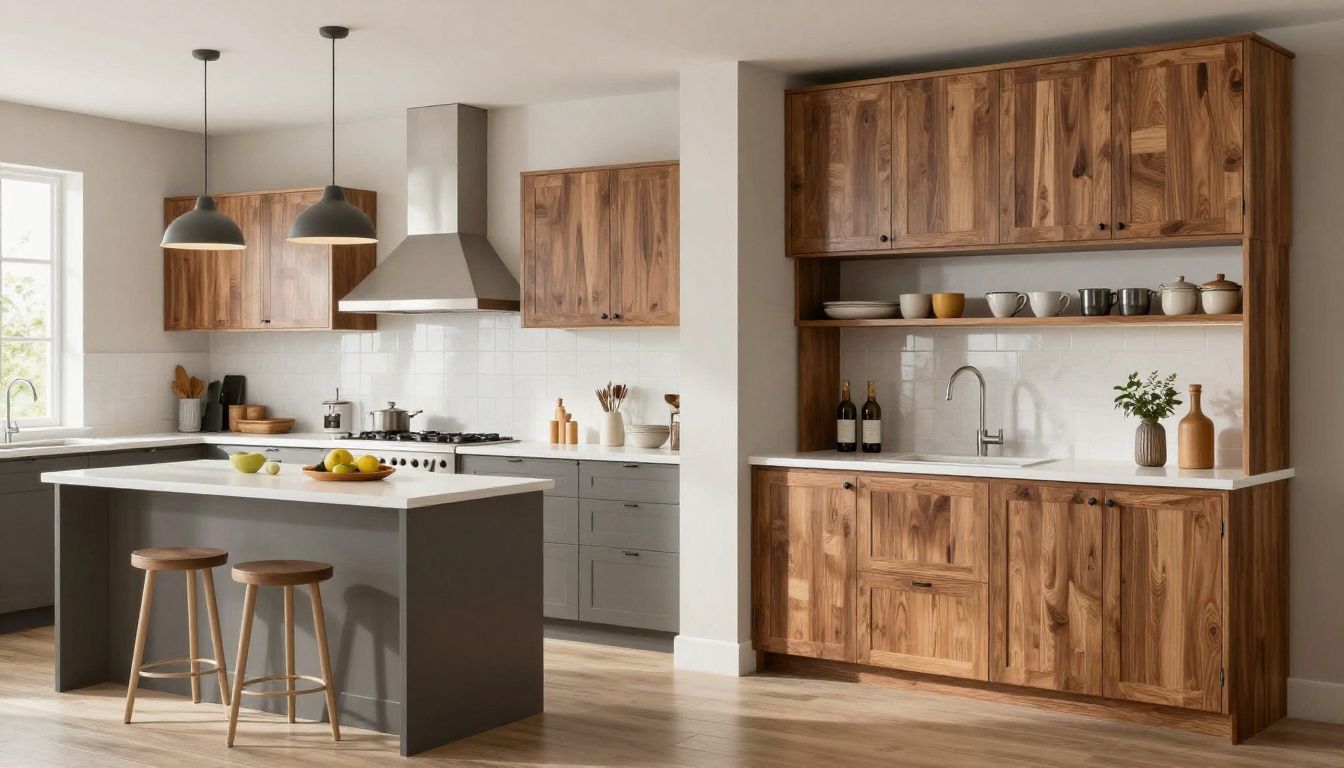
Painted vs Stained Kitchen Cabinets: Cost, Durability and Style Compared
If you choose the wrong finish for your kitchen cabinetry, you face two inevitable outcomes: either high-maintenance peeling in three years or a wood grain that clashes with your stone countertops. A poor choice in finish isn’t just an aesthetic regret; it is a financial one, typically costing between $3,000 and $8,000 to strip, sand, and refinish a medium-sized kitchen. Painted vs stained cabinets are not interchangeable options. Paint creates a uniform surface that masks the underlying timber, while stain penetrates the fibers to emphasize natural character. Your decision must be based on the environmental conditions of your specific kitchen, the species of the wood, and the labor intensity of the factory process required to ensure longevity.
Key Takeaways
- Painted cabinets require high-density medium-density fiberboard (MDF) or stable maple to prevent hairline cracks at the joints caused by seasonal wood movement.
- Stained finishes are more forgiving of physical impact, as nicks and scratches can be masked with touch-up markers and wood wax.
- The cost penalty for painted cabinetry is typically 15-20% higher than stain due to the necessary primer coats, curing time, and sanding between layers.
- Environmental stability is the determinant of finish life; solid wood species like oak are susceptible to shrinkage that will split paint lines at the stiles and rails.
Understanding the Construction Differences
When we discuss painted vs stained cabinets, we are fundamentally talking about how the shop handles the wood substrate. Paint is a film-forming finish. It sits on top of the surface. Wood is hygroscopic, meaning it absorbs and releases moisture annually based on Vancouver humidity levels. As the wood expands or contracts, joinery movement will occur. On a stained piece, this movement is often invisible. On a painted piece, it will manifest as tell-tale cracks where the door stile meets the rail.
To mitigate this, we prefer MDF or high-quality maple for painted projects. MDF is dimensionally stable; it does not move with humidity. If you are determined to have a natural wood aesthetic through stain, we select species like white oak or cherry, which respond predictably to the application process. Understanding the hottest kitchen cabinet color trends is only half the battle; the structural integrity of the base material dictates how those colors age.

Cost and Longevity Comparison
Budgeting for your renovation requires accounting for the labor intensiveness of these finishes. Paint requires a sealer coat, multiple color coats, and a conversion varnish topcoat. Each step requires curing time and orbital sanding. Stain is often a simpler, though more precise, application. If you are interested in design versatility, many clients balance these costs by incorporating two tone kitchen cabinet trends to keep overall square-footage costs manageable.
| Feature | Painted Cabinetry | Stained Cabinetry |
|---|---|---|
| Material Preference | MDF, Maple | White Oak, Walnut, Cherry |
| Cost Multiplier | 1.15x – 1.20x | 1.0x (Baseline) |
| Primary Maintenance | Touch-up paint kits | Stain pens and wax sticks |
| Durability | Prone to joint hairline cracks | Shows impacts more clearly |

Practical Tradeoffs for Vancouver Homes
In our region, humidity fluctuates significantly. We have seen instances where solid wood doors were painted in a facility with low humidity, then installed in a damp home near the coast, causing the wood to swell by a fraction of a millimeter. That sound like nothing, but it is enough to break the paint bond at the joint. If you need absolute uniformity, paint is the answer, but be prepared for occasional touch-ups. If you prioritize a natural, lived-in character where minor dings blend into the grain, stained wood is the superior choice.
When we plan for the custom cabinet installation timeline, we factor in these material curing needs. Stained projects move through the assembly line with fewer pauses for drying, which can occasionally shave days off the schedule compared to a multi-stage painted finish.

Choosing for Your Space
If your kitchen sees heavy traffic, such as homes with children or pets, a stained finish in a medium-to-dark tone remains the most utilitarian choice. It hides the inevitable dents and scratches better than high-gloss or matte paint. For those leaning toward modern, architectural aesthetics, we suggest elevating your work-from-home space with custom millwork using stained white oak for a high-end, furniture-grade feel that paint rarely achieves.

FAQ
Can I paint existing stained cabinets?
Yes, but it is labor-intensive. The original stain must be sanded down, a high-bonding primer applied, and then the topcoats. We rarely recommend this over new cabinetry if you want a factory-level finish, as the original wood grain may telegraph through the paint over time.
Does climate affect my cabinet finish choice?
Yes. In humid regions like the Pacific Northwest, solid wood behaves differently than engineered materials. If you live in an area with high moisture, painted cabinetry on MDF is more stable than painted cabinetry on solid wood, as MDF does not expand or contract when the humidity shifts.
Which finish hides scratches better?
Stained cabinetry in mid-tone woods typically hides damage effectively. Because the color is embedded into the wood fiber, a small scratch may only expose the lighter wood beneath, which can be easily hidden with a stain touch-up pen. A scratch on a painted surface exposes the primer or the raw wood, creating a visual contrast that is harder to fix.
Is there a benefit to a natural finish over a stain?
Yes, a clear coat or natural oil finish allows the true character and natural aging of the wood to show. Unlike stain, which can look dated as trends shift, natural wood is timeless. It is also the easiest to maintain, as spot repairs do not require color matching.
How do I decide what is right for my home?
Assess your tolerance for wear and your aesthetic goals. If you want a pristine, seamless look and are willing to touch up small joints, choose paint. If you want a lower-maintenance, high-character material that gets better with age, go with stain. Contact our team at Final Draft Cabinetry for a candid assessment of your specific space.