Can You Really Modernize Oak Cabinets With Paint? What to Expect
If you cover oak grain with thick paint to “modernize” cabinets, you risk adhesion failures and a bland, unnatural finish that peels in 2–4 years — at a cost of $7,000–$11,000 for a typical Vancouver kitchen. The core answer: Refinishing oak cabinets can update color, sheen, and hardware, but cannot erase heavy, open grain or inset raised-panel doors. For a truly modern look — slab fronts, invisible grain — true replacement or major reengineering is required.
Key takeaways
- Paint and varnish update oak cabinet color but not strong grain or classic profiles.
- Grain-filling hides texture but adds cost, time, and occasionally cracks due to wood movement.
- Simple hardware swaps and undercabinet lighting modernize easily, affordably.
- Full replacement or re-facing is the only way to get a seamless, contemporary look; higher upfront cost but longer lifespan.
Can paint really make oak kitchen cabinets look modern — or just newer?
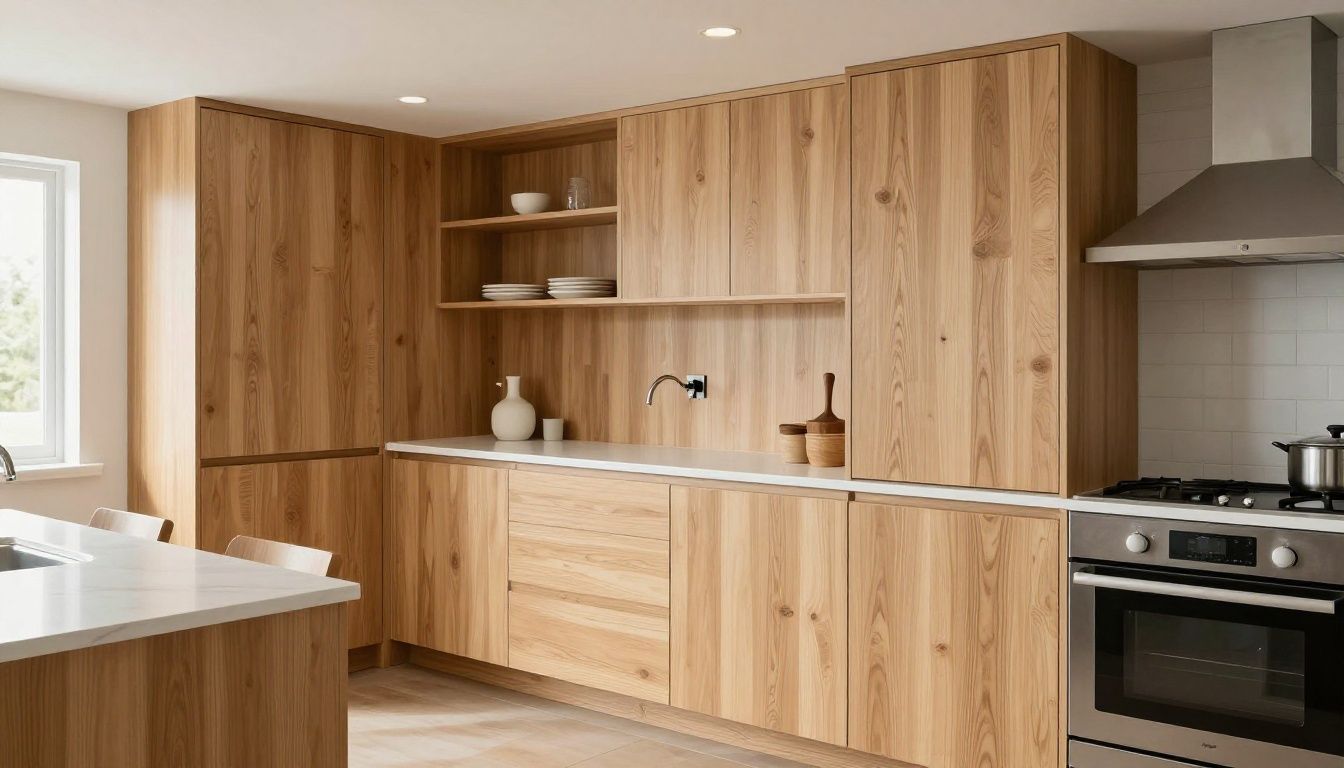
Paint changes the color and light-reflection of oak cabinets but cannot mask deep, open grain or prominent cathedral patterns. Even with high-build primers and pro sprayers, those visible pores (typically 0.5–2mm wide, running vertical along the panel faces) telegraph through. Dark colors (navy, black, charcoal) often accentuate textural inconsistencies, while high-gloss or icy whites tend to highlight every grain line.
Here’s the tradeoff: paint is the cheapest update — typically $7,000–$11,000 for a mid-sized kitchen (15–25 doors/drawers) by a pro shop in Vancouver or Calgary. But you’re making a bet: the core material (red or white oak, 90s-04 vintage, often flat-cut) will still visually assert itself unless deep-filled. Off-the-shelf DIY methods rarely last; pro two-part urethane systems perform better but only if prep is rigorous and environmental controls are tight.
Can grain-filling make old oak cabinets truly smooth?
Grain-filling — flooding the oak surface with a paste (oil or water-based), then sanding flush — is the trade’s answer to a smoother, modern cabinet face. It costs an additional $2,500–$4,000 depending on kitchen size, depth of grain, and profile complexity.
Painted grain-filled oak can pass for medium-density fibreboard (MDF) from 1–2 meters away, but up close or at joints you’ll still see subtle texture, especially as the wood moves with humidity.
| Option | Adds Cost (CAD) | Durability | Labor Time | Visual Smoothness |
|---|---|---|---|---|
| No filler | Base price | Good on prep | ~7–10 days | Obvious oak grain |
| Water-based | +$2,500–$3,000 | Fair to good | +2–4 days | 70–80% reduction |
| Oil-based | +$3,000–$4,000 | Good (slower) | +3–5 days | 85–95% reduction |
Grain fillers work best on flat shaker or slab doors, less so on heavy-raised panels and trims. In a recent job in Burnaby, a client opted for water-based filler; the panels looked smooth under semi-gloss white, but in low winter light, some cathedral grain patterns remained.
Hardware, lighting, and details that modernize oak kitchens without major construction
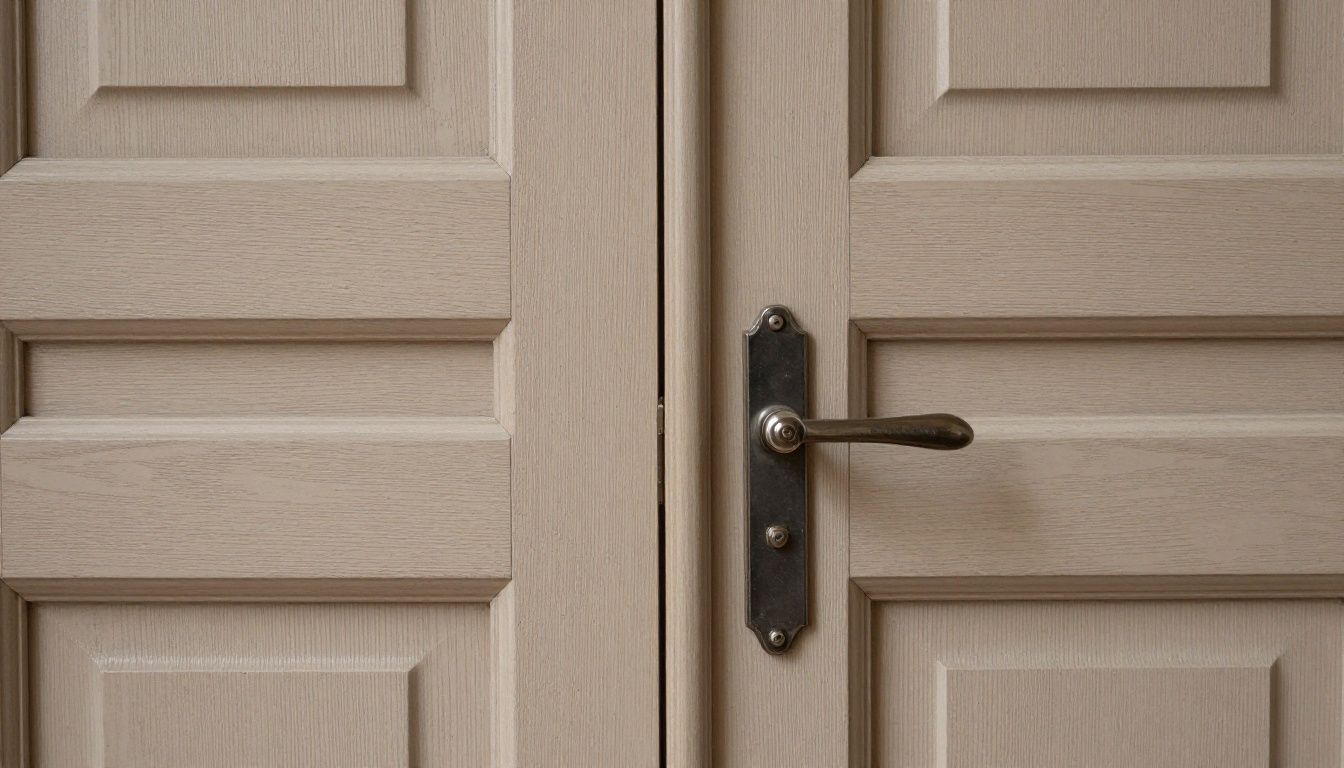
Swapping hardware for matte black or brushed brass pulls, updating hinges to concealed soft-close, and installing LED undercabinet lights can shift a kitchen’s palette toward contemporary for $600–$2,500. These changes play up the new finish but have no effect on wood grain or panel style.
Modern kitchen cabinet design also benefits from removing ornate light rails, installing square-edged toekicks, and simplifying crown moldings. These updates can be handled in 2–4 days by any competent millwork installer.
| Update | Typical Cost | Time Required | Lasting Impact |
|---|---|---|---|
| Hardware swap | $300–$800 | <1 day | Moderate |
| Concealed hinges | $400–$1,200 | 1–2 days | High (comfort) |
| Undercab lighting | $600–$1,200 | 0.5–1 day | High (look/use) |
| Trim/crown simplification | $500–$2,500 | 1–3 days | High (visual lines) |
In practice: In a 1989 Calgary kitchen, we removed the arched valance, replaced rope pulls with linear bar handles, and retrofitted LED tape lighting; the visual effect was significant — but up close, the grain stayed visible, the stile/rail structure unchanged.
When is full cabinet replacement or re-facing the right move?
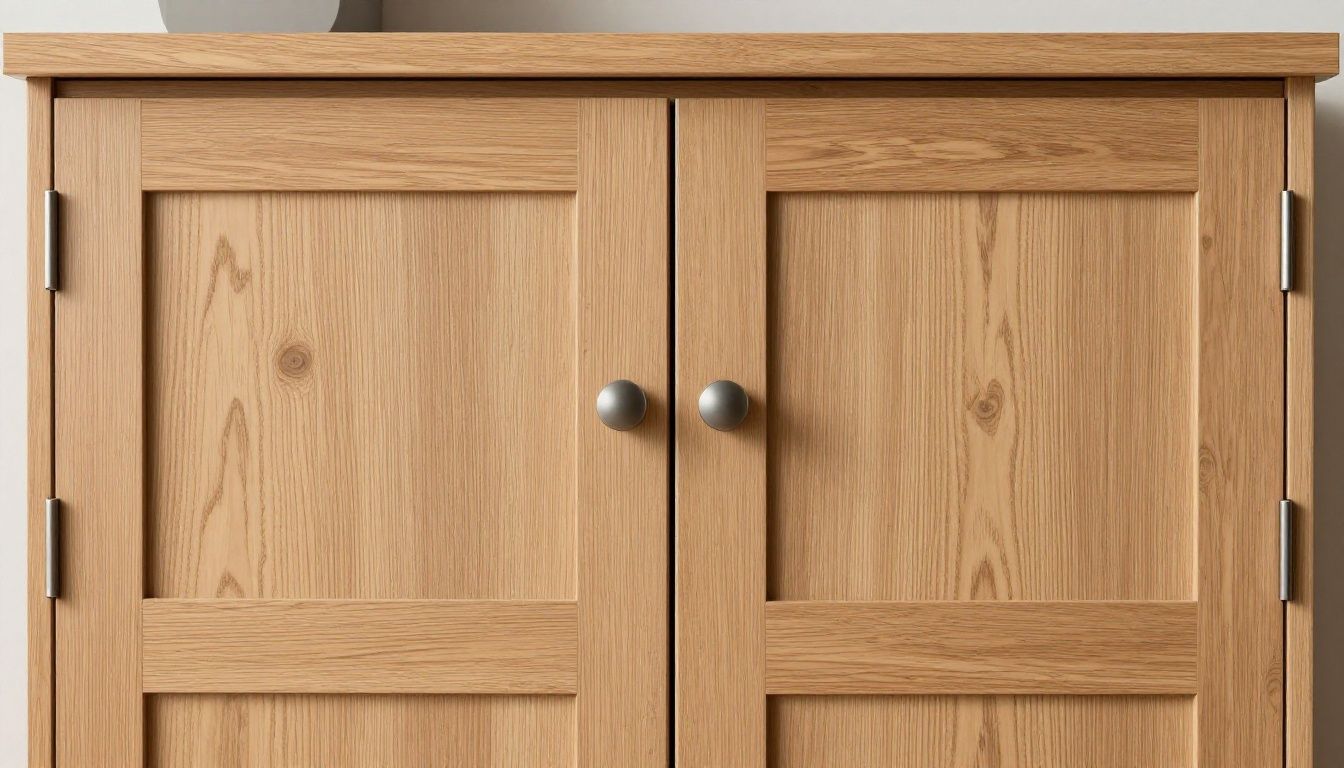
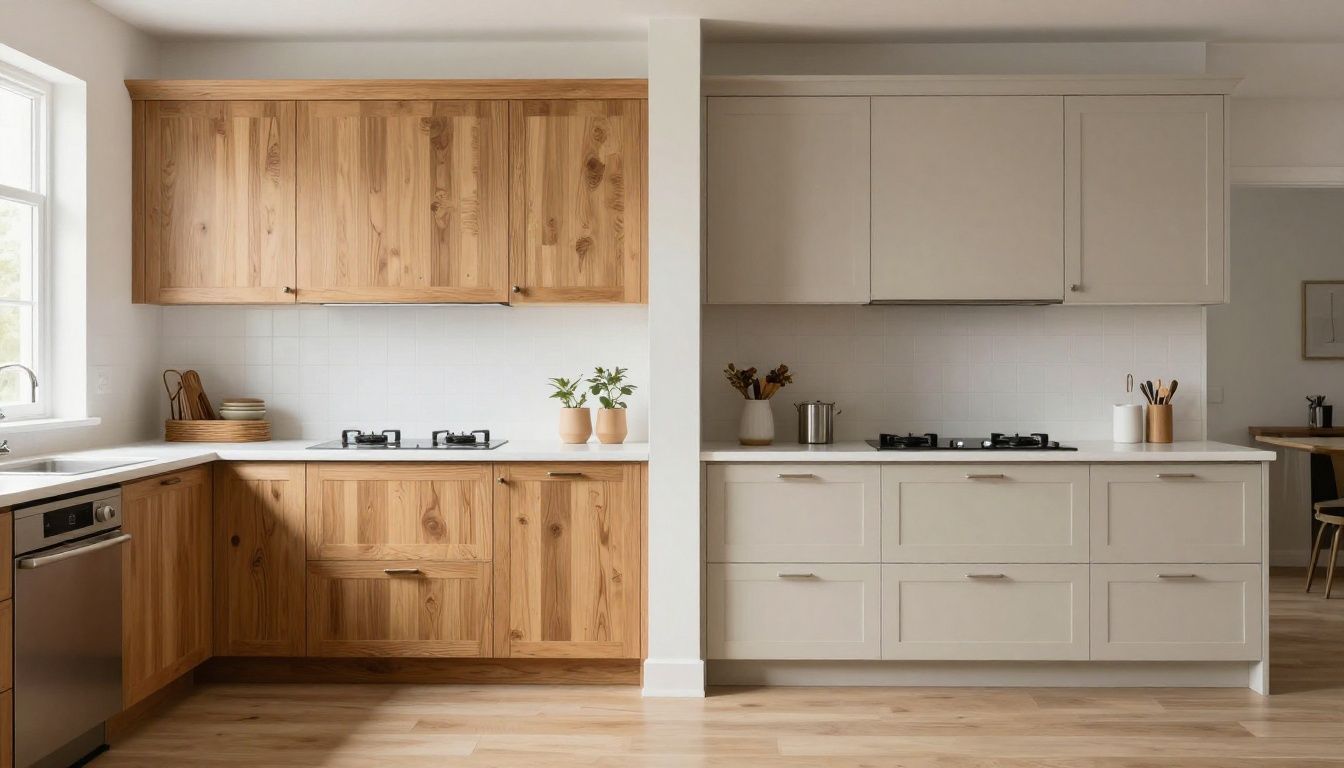
If your target is a seamless, slab-style, or true European modern kitchen — where all door faces are flush, and wood grain is invisible or horizontal-only — you’ll have to invest in new cabinet fronts or full replacement boxes.
Re-facing involves replacing just the doors/drawer fronts and sometimes veneering existing boxes, costing $12,000–$19,000 for a typical urban kitchen (not including major box modifications or specialty layouts). Full replacement, using pre-finished MDF or high-pressure laminate (HPL) slab, runs $20,000–$35,000+ depending on materials, layouts, and hardware.
| Method | Typical Cost (CAD) | Timeline | Grain Visible | Suitability |
|---|---|---|---|---|
| Paint only | $7,000–$11,000 | 6–10 days | Always | Budget, low traffic kitchens |
| Paint + filling | $9,500–$15,000 | 9–15 days | Minimal (still some) | Mid-tier, cosmetic improvement |
| Re-facing | $12,000–$19,000 | 5–10 days | None (new faces) | Modern appearance, faster |
| Full replacement | $20,000–$35,000+ | 2–4 weeks | None | Best for layout/function change |
Each method has a place. If you want to keep your existing layout, re-facing is surgical and less disruptive. For major function upgrades — pull-out pantries, open shelving, integrated panels — only full replacement will fit the brief.
What should you expect in timelines and disruption?
Refinishing and grain-filling leave most of your kitchen intact, but there’s still sanding dust, spray fumes, and restricted kitchen use for several days. Cabinet doors are often taken offsite; boxes are treated in place. Large projects (25–40 doors/drawers, grain-filled, new trims) can extend to three weeks.
Re-facing is faster and creates less mess, but relies on the basic integrity of current drawers and cabinet boxes.
Full replacement is the most disruptive: tear-out, new box install, templating countertops, plumbing, electrical. Expect loss of kitchen access for 2–4 weeks in best case scenarios. Local permitting is rarely triggered unless walls or major plumbing/electrical are altered (see City of Vancouver permit guidelines).
How do I decide what’s right?
Start with two criteria: your tolerance for remaining grain/trim, and kitchen function. If you’re sensitive to the tactile feel or visual texture of oak, no finish will make it fully disappear. If the profile (panel, rail, arch) frustrates you, paint isn’t enough — replacement is the honest fix. For resale in high-end Vancouver markets, visible oak grain on painted cabinets may reduce value; for rental or suite properties, a competent paint job adds lifespan at lower cost.
In a recent high-rise project, a client insisted on a flat matte look. Even after two rounds of filler and finish, under oblique (side) lighting, oak’s signature cathedrals still telegraphed — and it bothered them every day. That’s the risk to weigh.
FAQ
Can I DIY paint my oak kitchen cabinets and get a modern look?
You can, but results depend heavily on prep: sanding, degreasing, and correct primers. DIY methods rarely fill grain well or last as long. Expect to spend 30–50 hours, with a higher risk of chipping and telegraphing grain.
Does removing trim or crown molding help modernize oak cabinets?
Yes. Removing ornate trim lines, arches, and valances immediately modernizes lines. The work is often easiest during a paint or re-facing project. Leave square, flat trims for a more contemporary look.
Is there a way to completely hide oak grain without replacing doors?
No method fully hides it forever. Grain-filling works short term but may crack as humidity changes. Over time, joints and patterning can reappear through paint or filler, especially with wide temperature fluctuations.
What paint finishes look most modern on oak cabinets?
Matte and low-sheen (eggshell, satin) reads most contemporary. High-gloss shows every flaw and grain line. Always use professional-grade, two-part urethane products for kitchen cabinets.
How long does a pro-painted, grain-filled cabinet finish last?
A professionally finished, grain-filled oak cabinet will typically last 7–10 years under normal wear. Adhesion, finish quality, and lifespan depend on competent prep and controlled curing conditions.
Should I keep my oak cabinet boxes if I re-face, or replace everything?
If current cabinet boxes are structurally sound and layout works, re-facing is efficient. Replace everything if you want to move appliances, add storage, or upgrade box hardware/function, as old boxes will limit your plan.
When results matter — no tolerance for visible grain, dated trim, or chancy DIY — bring in a custom shop for an honest assessment. Refinishing may buy time and lift value, but only full re-facing or replacement truly modernizes oak kitchen cabinets. For reliable specs, timelines, and tailored solutions in Vancouver, Burnaby, or Calgary, start with a consultation from a cabinetmaker who’s seen every scenario.