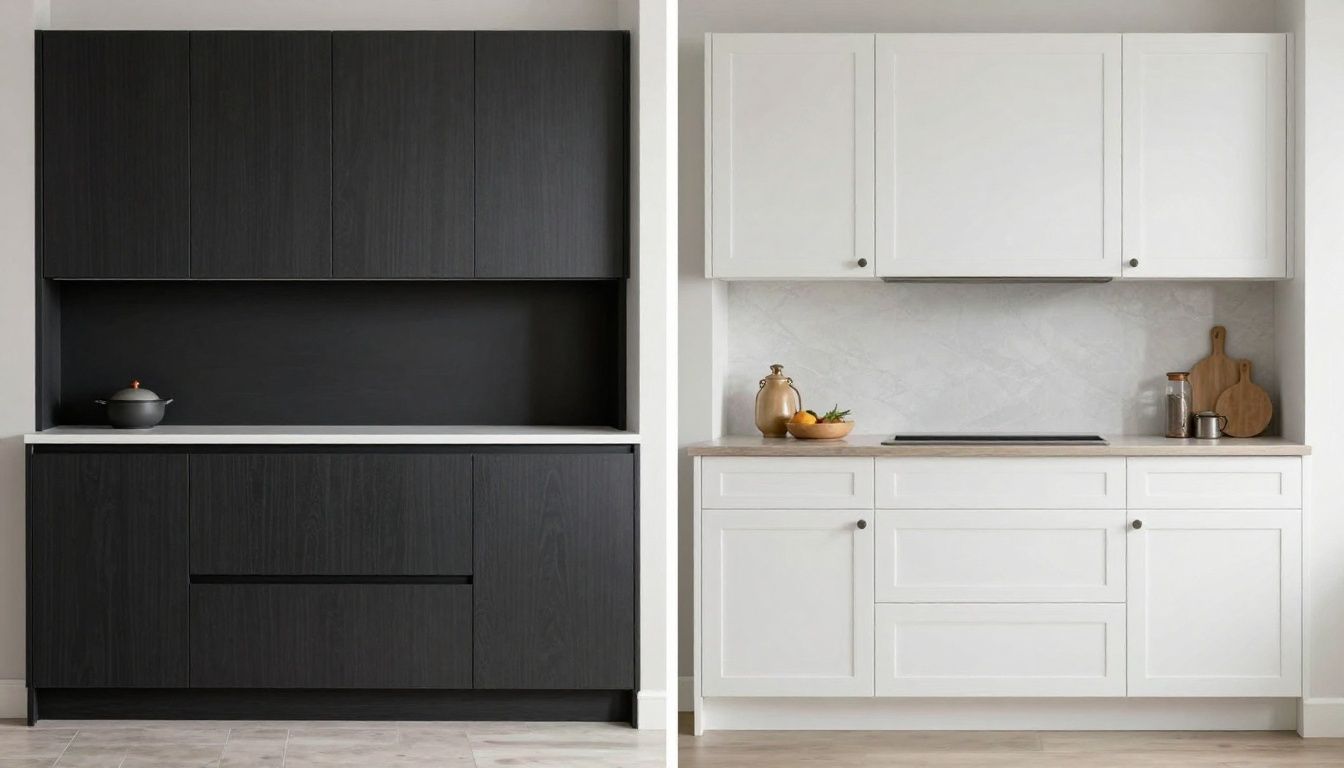
Slab vs Shaker Cabinets: Which Door Style Is Better for Your Kitchen?
Slab vs Shaker Cabinets: Which Door Style Is Better for Your Kitchen?
When we’re thinking about updating our kitchens, one of the first big decisions we face is the cabinet style. It really sets the whole mood for the room, you know? Two styles that come up a lot are slab and shaker cabinets. They both look good, but they’re pretty different. We’ve been looking into what makes them unique, how they fit into different kitchen vibes, and what’s actually easier to live with day-to-day. This guide breaks down the main differences between slab vs shaker cabinets so we can figure out which one is the best fit for our own homes.
Key Takeaways
- Slab cabinets are a single, flat panel, offering a clean, modern, and minimalist look that suits contemporary kitchens and makes cleaning simple.
- Shaker cabinets feature a five-piece construction with a recessed center panel and frame, providing a timeless, versatile style that works well in traditional, transitional, and farmhouse designs.
- When it comes to cleaning, slab doors are generally easier to maintain due to their smooth, unbroken surface, while shaker cabinets require more attention to their detailed edges and panels.
- The cost of both slab and shaker cabinets can vary widely based on material, finish, and construction quality, but simpler slab designs can sometimes be more budget-friendly than the more labor-intensive shaker style.
- While both styles have their merits, the best choice between slab vs shaker cabinets depends on our personal style preferences, how we use our kitchen, and the overall design narrative we want to create for our home.
Understanding The Core Differences: Slab vs Shaker Cabinets
When we’re planning a kitchen renovation, one of the first big decisions we face is the cabinet door style. It really sets the tone for the whole space. Two of the most popular choices we see are slab and Shaker cabinets, and while they might seem similar at first glance, they have some pretty distinct differences that impact everything from the look to how we care for them.
What Defines Slab Cabinet Doors?
Slab cabinet doors, sometimes called flat-panel doors, are exactly what they sound like: a single, solid, flat piece of material. There are no frames, no panels, no decorative grooves – just a smooth, unbroken surface. This simplicity is their defining characteristic. It’s this clean, unadorned look that makes them a perfect fit for modern and minimalist kitchens. The focus really shifts to the material itself and the finish, whether that’s a high-gloss lacquer, a matte finish, or a beautiful wood grain. They create a very streamlined and uncluttered appearance, which can make a kitchen feel more open and airy. If you’re aiming for a sleek, contemporary vibe, slab doors are definitely worth considering.
The Distinctive Design of Shaker Cabinets
Shaker cabinets, on the other hand, have a more traditional construction. They’re typically made from five pieces of wood: a flat center panel surrounded by a frame of four pieces – two vertical stiles on the sides and two horizontal rails on the top and bottom. This design gives the door a bit of depth and visual interest without being overly ornate. It’s a style that originated with the Shaker community, known for their emphasis on simplicity, functionality, and quality craftsmanship. This heritage gives Shaker cabinets a timeless appeal that works in a surprising number of different kitchen styles, from classic farmhouse to transitional designs. They offer a warm, familiar feel that many homeowners appreciate.
Key Distinctions in Door Construction
The construction difference between slab and Shaker doors has practical implications. Because Shaker doors are made of multiple pieces joined together, they can be more susceptible to changes in temperature and humidity. In kitchens with significant moisture fluctuations, lower-quality Shaker cabinets might eventually show small gaps at the joints or even slight warping over time. Slab doors, being a single piece, generally don’t have this issue. This makes them quite resilient. However, the recessed panel in a Shaker door can also be a place where dust and grime might settle, requiring a bit more attention during cleaning compared to the smooth surface of a slab door. When we look at the overall style of each, slab leans modern while Shaker offers a more versatile, classic charm.
Aesthetic Harmony: Matching Cabinet Styles to Your Kitchen’s Vibe
When we embark on a kitchen renovation, the cabinet style we choose sets the entire mood for the space. It’s more than just storage; it’s a foundational design element that speaks volumes about our personal taste and the overall atmosphere we want to create. Two of the most talked-about styles, Shaker and Slab, each bring a distinct personality to the table, and understanding their aesthetic leanings is key to achieving the kitchen of our dreams.
Slab Cabinets: The Epitome of Modern and Minimalist Design
If your vision for your kitchen leans towards the clean, uncluttered, and forward-thinking, then Slab cabinets are likely your perfect match. Their defining characteristic is a single, flat panel with no ornamentation. This simplicity is their strength, allowing them to blend seamlessly into contemporary, Scandinavian, or mid-century modern design schemes. The smooth, uninterrupted surface of slab doors makes a bold statement in its own right, letting the material and finish truly shine. Whether you opt for a high-gloss lacquer that reflects light and makes a space feel larger, or a sophisticated matte finish that offers a fingerprint-resistant elegance, slab cabinets contribute to an architectural and streamlined feel. They are particularly effective when paired with minimalist hardware or even handle-less systems, further emphasizing the sleekness. For those who appreciate a calm, open environment where other design elements like countertops and backsplashes can take center stage, slab cabinets are an excellent choice. They help reduce visual noise, creating a serene backdrop for your culinary adventures.
Shaker Cabinets: Embracing Timeless Charm and Versatility
Shaker cabinets, on the other hand, offer a different kind of appeal – one rooted in timelessness and adaptability. Their design, characterized by a five-piece construction with a recessed center panel, is simple yet possesses a subtle depth and craftsmanship. This classic look makes them incredibly versatile, fitting comfortably into a wide range of styles, from traditional and transitional to even some modern interpretations. They bring a sense of warmth and approachability to a kitchen. We often see them in colors like soft whites, creams, grays, or even muted blues and greens, which further enhance their inviting nature. The slight detailing of the frame and panel can be beautifully highlighted with matte or satin finishes, or even natural wood stains that showcase the grain. If you’re aiming for a kitchen that feels welcoming, established, and enduring, Shaker cabinets provide that perfect balance of understated elegance and practical design. Their enduring popularity is a testament to their ability to adapt to changing trends without ever looking dated. For a cohesive look throughout your home, consider how your cabinet choice pairs with your trim.
Achieving a Farmhouse or Classic Kitchen with Shaker Doors
For homeowners drawn to the cozy, inviting aesthetic of a farmhouse or a more traditional kitchen, Shaker doors are almost synonymous with the style. The framed panel design inherently adds a touch of handcrafted warmth and a sense of history that complements elements like butcher-block countertops, exposed beams, or natural stone backsplashes. They create a feeling of comfortable familiarity and groundedness. When finished in classic whites, creams, or soft, earthy tones, Shaker cabinets truly embody the spirit of a welcoming, lived-in kitchen. They provide a beautiful foundation for incorporating other charming details, making your kitchen a true heart of the home.
Creating a Sleek, Architectural Feel with Slab Doors
Conversely, if your design narrative leans towards the avant-garde, the minimalist, or the distinctly modern, Slab doors are your ideal canvas. Their unadorned, flat surface is perfect for creating a sense of spaciousness and order. In smaller kitchens, the reflective qualities of high-gloss finishes can make the space feel more expansive. For a truly cutting-edge look, consider pairing slab cabinets with integrated hardware or even push-to-open mechanisms for an ultra-clean appearance. This style allows for a bold statement through material choice or color, without the visual distraction of intricate details. It’s about creating a sophisticated, uncluttered environment that feels both intentional and serene. Slab cabinets are a fantastic choice for those who want their kitchen to feel like a modern sanctuary. You might even consider a slab backsplash to continue this seamless aesthetic.
Effortless Upkeep: Cleaning and Maintenance Considerations
When we think about our kitchens, we often focus on the big picture – the layout, the appliances, the overall style. But the day-to-day reality of living in and using our kitchens means that how we care for them is just as important. Cabinetry, being a major visual and functional element, needs to be easy to maintain. Let’s look at how slab and shaker styles stack up when it comes to keeping them looking their best.
The Ease of Cleaning Slab Cabinet Surfaces
One of the most significant advantages of slab cabinets is their simplicity. Their flat, uninterrupted surfaces mean there are no nooks or crannies for dust, grease, or food particles to get trapped. A quick wipe with a damp cloth and a mild, non-abrasive cleaner is usually all it takes to keep them looking pristine. This makes them a fantastic choice for busy households or anyone who prefers spending less time scrubbing and more time enjoying their kitchen. For those who love a minimalist aesthetic, the ease of cleaning slab doors is a major draw. It’s a design that truly works for you, not against you, in the daily rhythm of home life. You can find a wide variety of finishes for these doors, each with its own cleaning recommendations, but the fundamental ease of access remains.
Maintaining the Details of Shaker Cabinetry
Shaker cabinets, with their characteristic frame and recessed center panel, offer a classic look that many adore. However, this design does introduce a few more areas that require attention during cleaning. The edges of the frame and the perimeter of the recessed panel can accumulate dust and kitchen grime over time. Regular dusting with a soft brush or a microfiber cloth is recommended to prevent buildup. When it’s time for a more thorough clean, a slightly damp cloth with a gentle cleaner will do the trick, but it requires a bit more care to get into those corners. It’s not a difficult task, but it does involve a few more steps than simply wiping down a flat surface. This attention to detail is part of what gives Shaker cabinets their enduring charm, but it’s something to consider if low-maintenance is your absolute top priority.
How Finishes Impact Daily Maintenance
The finish you choose for either style can also play a role in how easy they are to maintain. High-gloss finishes, often seen on slab cabinets, can be stunning but tend to show fingerprints and smudges more readily. A matte or satin finish, available for both slab and shaker styles, can be more forgiving in high-traffic areas. For shaker cabinets, the paint or stain finish within the recessed panels needs to be durable. Over time, wear and tear in these detailed areas might become more noticeable depending on the quality of the finish. When selecting finishes, think about the practicalities of your kitchen’s use. A durable, well-applied finish on either style will make a significant difference in how well your cabinets hold up to daily life and how easy they are to keep looking fresh.
Choosing the right cabinet style isn’t just about aesthetics; it’s also about how the cabinets fit into your lifestyle. Considering the cleaning and maintenance involved upfront can save you time and effort down the road, allowing you to fully enjoy your beautiful kitchen without the added burden of constant upkeep.
Durability and Construction: What Lasts Longer?

When we think about kitchen cabinets, we want them to look good, of course, but we also want them to stand up to daily life for years to come. It’s easy to get caught up in the aesthetics of slab versus shaker, but let’s talk about what really makes them last.
Material Matters More Than Style for Longevity
Honestly, the door style itself – whether it’s a flat slab or a framed shaker – is only part of the story. What truly dictates how long your cabinets will hold up is the material they’re made from and the quality of the construction. Both slab and shaker doors can be crafted from solid wood, high-quality MDF, or durable laminates. A well-made slab cabinet from premium materials will almost always outperform a poorly constructed shaker cabinet. We often see slab doors with high-gloss or acrylic finishes, which can be beautiful but might show scratches more readily than a painted shaker door. Conversely, the five-piece construction of a shaker door, while adding visual depth, can sometimes be a point of weakness if not assembled perfectly.
How Construction Affects Resilience to Humidity
Kitchens are environments with fluctuating humidity, especially around the sink and stove. This is where the construction method can play a role. Shaker cabinets, with their multiple pieces joined together, can be more susceptible to movement or warping if exposed to significant moisture over time, particularly if they are lower-quality builds. The joints where the frame meets the center panel are potential areas where expansion or contraction can occur. Slab doors, being a single, solid piece, generally handle changes in humidity more gracefully. However, it’s important to note that the type of material used is still a primary factor; a solid wood shaker will likely fare better than a particleboard slab in humid conditions.
Understanding the Impact of Finishes on Durability
The finish you choose can significantly impact how well your cabinets wear over time. For slab cabinets, a matte lacquer or a durable laminate can be quite resilient. High-gloss finishes, while stunning, tend to highlight every fingerprint and minor scratch. With shaker cabinets, the finish is applied to a more complex surface. A high-quality paint job will protect the wood and add to its longevity. However, on shaker doors, edge banding on a slab door, if it comes loose, can be quite noticeable because the surface is so plain. The frame and recessed panel of a shaker door can sometimes help to camouflage minor scuffs or wear and tear that might be more apparent on a completely flat surface. When considering longevity, it’s wise to look at the overall quality of both the material and the finish, rather than just the door shape. For a truly lasting investment, we recommend exploring quality cabinet materials.
Ultimately, the longevity of your kitchen cabinets hinges on a combination of factors. While style plays a role in aesthetics and maintenance, the underlying quality of materials and construction methods are paramount. Investing in well-built cabinets, regardless of whether they are slab or shaker, is key to ensuring they remain beautiful and functional for decades.
Budgeting for Your Dream Kitchen: Cost Comparisons

When we’re planning a kitchen renovation, the budget is always a big topic. It’s not just about picking pretty doors; it’s about making smart choices that look good and make sense financially. Both slab and shaker cabinets have their own price tags, and understanding these differences can help us allocate our funds wisely.
Factors Influencing Slab Cabinet Pricing
Slab cabinets, with their simple, flat design, often present a more straightforward cost structure. Generally, their construction is less labor-intensive than more detailed styles. However, the material plays a significant role. A solid wood slab, like maple or cherry, will naturally cost more than a particleboard or MDF core with a laminate or veneer finish. The quality of the finish also impacts the price; a high-gloss lacquer will add to the expense compared to a matte paint. We’ve found that while slab cabinets can be a more budget-friendly option, opting for premium materials and finishes can certainly bring their cost up.
Understanding the Cost of Shaker Cabinet Construction
Shaker cabinets, with their distinctive five-piece door construction (a flat center panel surrounded by a frame), typically involve more craftsmanship. This means more labor and potentially more material, which often translates to a higher initial cost compared to basic slab doors. The type of wood used for both the frame and the panel is a major cost driver. Solid hardwoods like oak or maple are common and durable but pricier. We also see variations in pricing based on whether the cabinets are stock, semi-custom, or fully custom. For instance, semi-custom cabinets can start at a higher price point per linear foot than ready-to-assemble options.
When Premium Finishes Elevate Slab Cabinet Costs
While slab cabinets are often seen as the more economical choice, we’ve noticed that certain finishes can significantly increase their price. A high-gloss, multi-coat lacquer finish, for example, requires meticulous application and can be quite expensive. Similarly, exotic wood veneers or specialized paint colors can add a premium to the cost. It’s important to remember that even with a simple slab design, the quality of the materials and the application of the finish are key determinants of the final price. We often find that the difference in cost between a basic slab and a high-end slab can be substantial, sometimes even rivaling the cost of well-made Shaker cabinets.
When comparing costs, it’s not just about the door style itself, but the entire cabinet box, the hardware, and the installation. A beautiful door on a poorly constructed box won’t serve us well in the long run. We always advise looking at the total package.
Here’s a general idea of how costs can compare, though actual prices vary widely:
| Cabinet Style | Typical Price Range (per linear foot) |
|---|---|
| Slab (Basic) | $100 – $250 |
| Slab (Premium) | $250 – $500+ |
| Shaker (Stock) | $150 – $300 |
| Shaker (Custom) | $300 – $600+ |
Remember, these are just estimates. We always recommend getting detailed quotes based on your specific kitchen dimensions and desired materials.
Visualizing Your Space: Which Style Enhances Room Perception?
When we’re planning a kitchen renovation, how the space feels is just as important as how it looks. The cabinet doors we choose play a surprisingly big role in this. They can make a small kitchen feel more open or a large one feel cozier. Let’s look at how slab and shaker styles affect the perception of your kitchen.
How Slab Cabinets Contribute to Openness
Slab cabinets, with their clean, flat surfaces, are masters at creating a sense of spaciousness. Because there are no frames or panels to break up the visual line, they present a smooth, uninterrupted facade. This visual simplicity makes a room feel larger and more airy. In smaller kitchens, this effect is particularly noticeable. High-gloss finishes on slab doors can further amplify this by reflecting light, bouncing it around the room and making it seem even more expansive. It’s like giving your kitchen a little visual boost, making it feel less confined and more welcoming. If you’re aiming for that minimalist, uncluttered look, slab doors are definitely your best bet for maximizing perceived space.
The Depth and Character of Shaker Cabinets
Shaker cabinets, on the other hand, bring a different kind of visual dynamic. Their signature recessed center panel and framed construction introduce subtle depth and shadow lines. This detail adds a layer of character and a more traditional feel to the kitchen. While they might not create the same expansive illusion as slab doors, they offer a sense of substance and warmth. Think of it as adding a bit of architectural interest. This depth can make a larger kitchen feel more grounded and inviting, rather than cavernous. For those who appreciate a more classic or transitional aesthetic, the inherent detail in Shaker doors provides a comforting familiarity and a handcrafted quality that slab doors simply don’t possess.
Making Countertops and Backsplashes Shine
Both cabinet styles can be used strategically to highlight other features in your kitchen. Slab cabinets, with their minimalist nature, act as a perfect backdrop. They allow your countertops, backsplash, and hardware to truly take center stage. If you’ve invested in a stunning piece of granite or a unique tile backsplash, slab doors will ensure those elements get the attention they deserve without competing for visual focus. Shaker cabinets, while having more inherent detail, can also complement these features beautifully. The framed design can frame your countertops and backsplashes in a way that feels intentional and cohesive. The choice often comes down to whether you want your cabinets to be a subtle supporting player or a more integrated part of the overall design narrative. Exploring different cabinet door styles like Shaker, Slab, and others can help you visualize how each might interact with your chosen finishes.
Customization and Finishing Touches
Exploring Finish Options for Slab Doors
When we consider slab cabinets, their smooth, uninterrupted surfaces present a fantastic canvas for a wide array of finishes. This simplicity allows the chosen finish to truly define the cabinet’s character. High-gloss lacquers, for instance, can lend a sophisticated, almost mirror-like sheen that bounces light around the room, making smaller kitchens feel more expansive. On the other hand, a matte paint finish offers a softer, more subdued elegance and is often more forgiving when it comes to fingerprints and smudges – a practical consideration for busy households. We also see beautiful results with wood veneers or even textured laminates that mimic natural materials, adding a layer of warmth and depth without the complexity of a framed design. The key is selecting a finish that aligns with the overall aesthetic and the practical demands of your kitchen.
Customization Potential with Shaker Cabinets
Shaker cabinets, with their signature recessed center panel and distinct frame, offer a different kind of customization. While the basic structure remains consistent, the real magic lies in the finishes and the details. We often see homeowners opt for classic white or off-white paints, which provide a bright, timeless look that works in almost any setting. However, the versatility extends far beyond that. Rich wood stains, like those found on maple or white oak, can beautifully highlight the natural grain and the craftsmanship of the construction. For those seeking a bolder statement, deep hues such as navy, sage green, or charcoal gray can add a dramatic flair. The slightly more intricate design of Shaker doors also lends itself well to satin or matte finishes, which can subtly emphasize the texture and depth of the recessed panel.
Hardware Choices to Complement Each Style
No cabinet is truly complete without the right hardware, and this is where we can really personalize the look of both slab and Shaker styles. For slab cabinets, the minimalist design often calls for hardware that either blends in or makes a subtle, modern statement. Think sleek bar pulls in brushed nickel or matte black, or even minimalist knobs. Sometimes, integrated or handleless designs are chosen to maintain that ultra-clean look. With Shaker cabinets, the possibilities expand. You can lean into a traditional feel with classic bin pulls or decorative knobs, or opt for a more contemporary vibe with clean-lined bar hardware. The choice of hardware can dramatically alter the perceived style of the cabinet, allowing us to fine-tune the kitchen’s overall personality. It’s a small detail that makes a big difference in the final presentation of your kitchen cabinetry.
Strategic Design: Mixing Slab and Shaker for Unique Kitchens

While we often discuss choosing one style for your entire kitchen, there’s a sophisticated approach that can add incredible depth and personality: mixing slab and shaker cabinets. This isn’t about making a compromise; it’s about creating a custom look that feels intentional and visually dynamic. We’ve seen this technique transform kitchens, adding a layer of design that truly sets them apart.
The Art of Combining Cabinet Styles
Combining cabinet styles is a way to play with texture, form, and visual weight. Think of it like layering in fashion – it creates interest and a more complex, appealing final look. For instance, using shaker cabinets for the perimeter of your kitchen can provide a classic, grounding feel. Then, introducing slab cabinets on a central island can create a modern focal point. This contrast draws the eye and breaks up the uniformity, making the space feel more curated. It’s a way to have the best of both worlds, blending timeless appeal with contemporary flair. This approach is particularly effective when you want to achieve a transitional kitchen design, which bridges traditional and modern aesthetics.
Creating Visual Interest with Two-Tone Designs
Two-tone kitchens are incredibly popular, and mixing slab and shaker doors is a fantastic way to achieve this. You might opt for a lighter color on your upper cabinets and a darker, richer tone on your base cabinets, or vice versa. For example, imagine crisp white shaker uppers paired with deep navy slab base cabinets. This creates a striking contrast that adds character without overwhelming the space. The key is to maintain a cohesive color palette and finish across both styles to ensure the mix feels harmonious rather than chaotic. We often see this done with a matte finish on shaker doors and a slightly glossier finish on slab doors for subtle variation.
Island Design: A Popular Application for Mixing Styles
The kitchen island is often the heart of the kitchen, and it’s a prime candidate for a contrasting cabinet style. Using slab doors on the island can give it a sleek, furniture-like appearance, making it stand out from the surrounding shaker cabinetry. This is a common strategy to introduce a modern element into a more traditional kitchen layout. Alternatively, you could use shaker doors on the island if the rest of your kitchen features slab cabinets, creating a softer, more inviting centerpiece. This deliberate contrast can make your island a true statement piece, whether it’s for prep work or casual dining. It’s a design choice that adds both function and significant aesthetic appeal to your kitchen’s layout. Mixing shaker and slab cabinets can truly redefine your kitchen’s character.
Long-Term Value: Resale Appeal and Timelessness

When we think about updating our kitchens, it’s not just about how they look today, but also about how they’ll hold up over time and what they mean for our home’s value down the road. It’s a big investment, after all.
The Enduring Popularity of Shaker Cabinets
Shaker cabinets have really stood the test of time, and there’s a good reason for that. Their design is so adaptable; it just seems to fit everywhere. Whether our homes lean towards traditional, farmhouse, or even a more transitional style, Shaker doors blend right in. We can paint them a bright white for that airy farmhouse feel, go for a deep navy for something a bit more dramatic, or keep a natural wood finish for a classic look. This ability to fit in without taking over is a huge part of their lasting appeal. It means that when it comes time to sell, a kitchen with Shaker cabinets is likely to appeal to a wider range of buyers. They offer a sense of familiarity and warmth that many people look for in a home. It’s like a well-loved piece of furniture that never goes out of style.
How Modern Aesthetics of Slab Cabinets Impact Resale
Slab cabinets, on the other hand, bring a distinctly modern and sleek vibe. Their clean, uninterrupted surfaces are fantastic for creating a minimalist look. While this is incredibly appealing to those who love contemporary design, it’s worth considering how this might play out in the resale market. In areas where modern homes are highly sought after, slab cabinets can be a significant draw. They signal a current design sensibility and can make a kitchen feel very open and architectural. However, in more traditional markets, their ultra-modern look might be less universally appealing than the tried-and-true Shaker style. It’s not that they don’t add value – they absolutely do, especially when made with quality materials – but their appeal might be a bit more niche. We find that pairing them with the right hardware can really help bridge the gap and make them feel more approachable to a broader audience.
Investing in Quality for Lasting Beauty
Ultimately, no matter which style we lean towards, the quality of the materials and construction plays the biggest role in long-term value and beauty. A well-made Shaker cabinet from solid wood will always outlast a poorly constructed slab cabinet, and vice versa. When we invest in high-quality materials, whether it’s a durable hardwood for Shaker doors or a premium laminate or veneer for slab fronts, we’re investing in longevity. This means fewer repairs, better performance over the years, and a kitchen that continues to look great. It’s this commitment to quality that truly ensures our kitchen remains a beautiful and valuable part of our home for years to come. Think about it: a kitchen that ages gracefully, with cabinets that don’t warp, chip, or fade prematurely, is a kitchen that retains its charm and its worth. For those planning to sell in the future, this attention to detail is often noticed and appreciated by potential buyers, making the initial investment feel even more worthwhile. We’ve seen how high-quality materials can make all the difference in a kitchen’s lifespan and overall appeal.
Making the Final Decision: Your Kitchen’s Perfect Fit
We’ve explored the distinct looks, practicalities, and costs of both slab and shaker cabinets. Now, it’s time to bring it all together and decide which style truly fits your home and lifestyle. Think of this as the final step in creating a kitchen that you’ll love for years to come.
Aligning Cabinet Choice with Your Lifestyle
Your kitchen is more than just a place to cook; it’s the heart of your home. How you use it day-to-day should heavily influence your cabinet choice. If your kitchen is a high-traffic zone, perhaps with kids and pets, ease of cleaning becomes paramount. Slab cabinets, with their smooth, uninterrupted surfaces, are undeniably simpler to wipe down after a busy day. There are no nooks or crannies for crumbs or grease to hide. Shaker cabinets, while beautiful, do require a bit more attention to detail when cleaning due to their framed construction and recessed panels.
Consider these points when thinking about your daily routine:
- Busy Families: Slab cabinets often win for their low-maintenance appeal.
- Entertainers: Both styles can work, but a sleek slab might better complement a modern entertaining space, while shaker offers a warmer welcome.
- Minimalists: Slab cabinets align perfectly with a desire for uncluttered spaces.
- Those Who Love to Cook: If your kitchen sees a lot of action, think about how easily each style can be kept clean. A matte finish on either style can be more forgiving than a high-gloss option.
Considering Your Kitchen’s Design Narrative
Beyond daily use, your cabinet choice tells a story about your home’s overall aesthetic. Slab cabinets are the clear choice for a modern, minimalist, or even a Scandinavian-inspired kitchen. They provide a clean backdrop that allows other design elements, like a striking backsplash or unique countertops, to take center stage. They contribute to a sense of openness and can make smaller kitchens feel larger by reflecting light and minimizing visual clutter. For a truly architectural feel, slab doors are hard to beat.
On the other hand, shaker cabinets are the champions of versatility. They fit beautifully into traditional, transitional, and even contemporary farmhouse designs. Their subtle detailing adds a touch of warmth and character that feels timeless. If you’re aiming for a cozy, inviting atmosphere or a classic look that won’t go out of style, shaker doors are an excellent foundation. They offer a sense of depth and a handcrafted quality that many homeowners adore. You can explore various cabinet styles to see how they might fit your vision.
The Importance of Material Quality Over Style Alone
While the door style—slab or shaker—is a significant decision, we cannot overstate the importance of the underlying material and construction quality. A well-made slab cabinet from a premium material will always outperform a poorly constructed shaker cabinet. The finish, the joinery, and the durability of the core material are just as, if not more, important than the shape of the door itself. Don’t let the allure of a particular style overshadow the need for lasting quality. Investing in superior materials and construction means your cabinets will not only look good but will also stand the test of time, resisting wear and tear and maintaining their beauty for decades. This is where true long-term value lies, regardless of whether you choose the clean lines of a slab or the classic appeal of a shaker.
Ultimately, the best cabinet style is the one that aligns with your personal taste, your daily life, and your home’s overall design narrative. By considering these factors, you can make a confident choice that brings both beauty and function to your kitchen.
You’ve reached the part where you pick the best kitchen for your home. It’s an exciting step! We want to help you make sure it’s the right choice. Ready to see what we can do for you? Visit our website today to get a free estimate and start planning your dream kitchen!
Making Your Final Choice
So, after looking at all the details, the big question remains: slab or shaker? We’ve seen how slab cabinets offer that clean, modern look and are a breeze to wipe down, which is a huge plus for busy households. On the other hand, shaker cabinets bring a timeless warmth and a bit more character, fitting into a wider range of styles and hiding minor wear and tear a little better. Ultimately, the best choice really boils down to what you want your kitchen to feel like and how you live in it. Think about the style you’re aiming for, how much time you want to spend on cleaning, and what fits your budget. No matter which you pick, remember that the quality of the materials and how well they’re put together will make a big difference in how your kitchen looks and lasts for years to come.
Frequently Asked Questions
What’s the main difference between slab and shaker cabinets?
The biggest difference is how the doors look. Slab cabinet doors are completely flat and smooth, giving a modern and simple look. Shaker cabinet doors have a frame around a flat middle part, which adds a bit more detail and a classic feel.
Which cabinet style is easier to clean?
Slab cabinets are generally easier to clean. Their smooth, flat surface means you can wipe them down quickly without worrying about dirt getting stuck in grooves or corners. Shaker cabinets have more edges and a recessed panel where dust and grease can build up, so they need a little more effort to keep clean.
Are slab cabinets better for modern kitchens, and shaker for traditional ones?
Yes, that’s often the case. Slab cabinets are perfect for modern, minimalist, or Scandinavian kitchens because of their clean lines. Shaker cabinets are very versatile and work well in traditional, farmhouse, or transitional kitchens, offering a timeless charm.
Can we mix slab and shaker cabinets in the same kitchen?
Absolutely! Mixing styles can create a unique and visually interesting kitchen. A popular approach is to use shaker cabinets for the base cabinets and slab cabinets for the upper cabinets, or to use one style for the main cabinets and the other for the kitchen island.
Which style is typically more expensive?
Generally, shaker cabinets can be a bit more expensive because their five-piece construction requires more materials and labor to build. However, the final cost can vary a lot depending on the materials and finishes chosen for both styles.
Do slab cabinets look too plain for some kitchens?
While slab cabinets have a simple design, they don’t have to look plain. You can add warmth and personality by choosing interesting wood finishes, using stylish hardware, or by letting other kitchen elements, like a colorful backsplash or unique countertops, be the focal point.
Which cabinet style is better for a busy family kitchen?
For busy families, slab cabinets are often recommended because they are much easier to clean. If you have kids or cook a lot, the smooth surface of slab doors makes wiping up spills and fingerprints a breeze compared to the nooks and crannies of shaker doors.
Does the material of the cabinet matter more than the style for how long it lasts?
Yes, the material and the quality of the finish are usually more important for durability than the door style itself. Both slab and shaker cabinets can be made from various materials like solid wood, MDF, or laminate. High-quality materials will ensure longevity regardless of whether the door is flat or framed.