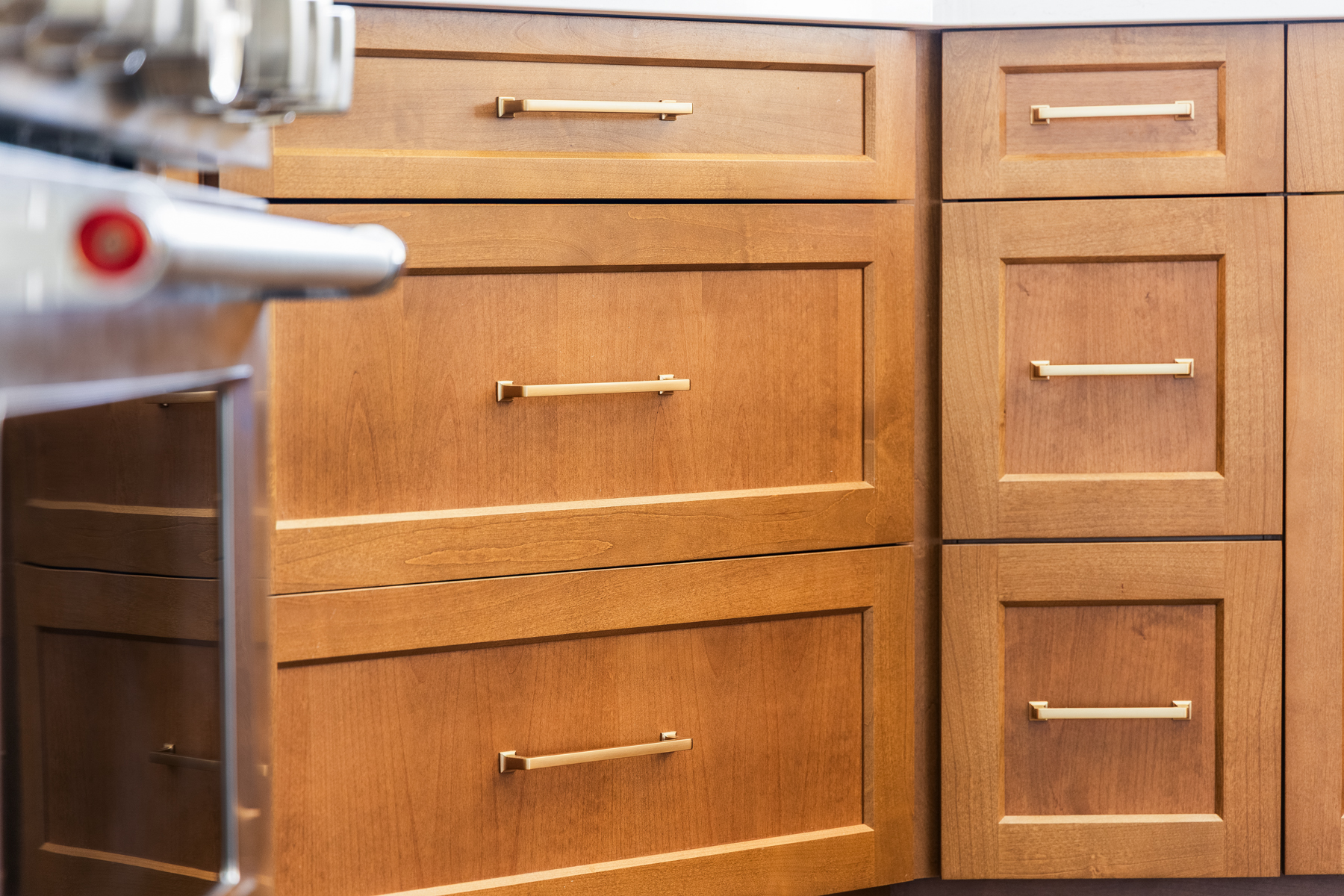
How to Clean and Care for Kitchen Cabinets, Finish by Finish
To care for kitchen cabinets, wipe them with a soft cloth dampened with warm water, add a little mild dish soap for grease, and dry them straight away. Keep abrasives, ammonia, bleach, solvents, wax and silicone polish off every finish. Hold indoor humidity between 30% and 50%, and wipe up water at the sink base and dishwasher before it can sit.
That covers painted and stained wood. Thermofoil, laminate and high-gloss acrylic each add a rule or two, so the table below sorts it by finish. Most of this comes straight from cabinet and hardware manufacturers’ own care guides, and the last section covers the small hinge and drawer adjustments you can make with a screwdriver.
Kitchen cabinet care at a glance
- After cooking: wipe splatters near the range and sink with a damp microfibre cloth, then dry.
- Weekly: if you cook most days, wipe down the doors around the stove, oven, prep areas, sink and garbage, as KraftMaid suggests.
- Every time: spray cleaner onto the cloth instead of the cabinet, and try any new product on a hidden spot first.
- Through the seasons: keep a hygrometer in the kitchen and the reading between 30% and 50%.
- When the heat comes on in the fall and goes off in the spring: tighten loose pulls and hinge screws, and check door gaps and drawer fronts.
- Never: hang damp towels over doors, use a steam cleaner on the hinges and runners, or run a toaster or coffee maker under the uppers.
How do you clean kitchen cabinets by finish?

| Finish | Everyday cleaning | Grease or stains | Avoid |
|---|---|---|---|
| Painted | Soft cloth with warm water, then dry | Mild dish soap solution, a clean damp wipe, then dry | Abrasive pads, solvents, wax |
| Stained wood | Soft cotton cloth with warm water, then dry | Mild dish soap solution; never soak | Too much water, ammonia, bleach, polish |
| Thermofoil | Damp cloth or sponge with mild dish soap | Most non-abrasive household cleaners | Acetone, solvents, ammonia, baking soda, brushes, high heat |
| Laminate or melamine | Damp soft cloth, dried with microfibre | Mild liquid detergent, then rinse; mild glass cleaner for streaks | Abrasives, scouring pads, acids, alkaline cleaners |
| High-gloss acrylic | Wet microfibre or chamois with water or mild soap | Mild soap and water; the maker’s polish kit for fine marks | Dry wiping, paper towels, acetone, brushes |
| Glass doors | Ammonia-free glass cleaner sprayed onto a cloth | Same | Spraying the glass directly |
Painted and stained cabinets get the same basic treatment. MasterBrand’s care guide suggests a soft, lint-free cloth and warm water, and for grease about 5% dishwashing liquid to 95% water (dishwashing liquid, not dishwasher detergent). Wipe again with a clean damp cloth and dry with another. Our guide to painted kitchen cabinets explains how sheen and door core affect wear.
Thermofoil is a PVC film pressed onto an MDF core, and its weak points are heat and the edges. Raywal’s care page warns that acetone, ethyl alcohol, mineral oils and turpentine can break down the edge bond. Holiday Kitchens adds ammonia, baking soda, sink and toilet bowl cleaners, and any cleaner used with a brush to the list.
Laminate and melamine need little more than a damp cloth, but they scratch. MasterBrand says to dry them with microfibre and not to clean them in direct sun. High-gloss acrylic is fussier again: Showplace says to clean it with a wet microfibre cloth or chamois, never wipe it dry, and keep paper towels, brushes and scouring pads away. Slab doors of any finish are the quickest to wipe, and our guide to cabinet door styles shows which profiles hold dust.
What cleaning products should you avoid on cabinets?
The manufacturers’ lists overlap almost entirely:
- Scouring powder, scouring pads, steel wool and the rough side of a sponge.
- Ammonia, bleach and any product that contains either.
- Solvents and petroleum products such as mineral spirits, nail polish remover and paint thinner.
- Tub, sink and toilet bowl cleaners.
- Wax, silicone and furniture polish. MasterBrand says cabinets don’t need waxing and that build-up turns hazy, streaked or yellow, and KraftMaid says the same about wax polishes and silicones.
- The sponge or dishcloth you use for dishes, which carries grease and leftover cleaner.
- Steam cleaners, which Blum warns against on its fittings.
Vinegar mixes and baking soda pastes get recommended a lot online. Holiday Kitchens lists acids among the cleaners that can mar laminate and puts baking soda on its avoid list for thermofoil, so we’d leave both in the pantry.
What humidity is best for kitchen cabinets?
Health Canada recommends keeping indoor relative humidity between 30% and 50%, and an inexpensive hygrometer from a hardware store will show you the reading. Cabinet manufacturers’ own ranges sit close to that. Holiday Kitchens requires a stable 35% to 50% around its wood cabinets to keep the warranty, and MasterBrand’s guide gives 30% to 55%. Aim for 35% to 50% and you’re inside all three.
Outside that range, wood moves. MasterBrand notes that damp coastal homes can reach 70% to 80% indoors, which swells joints, while cold, dry winters can keep a house below 20% for weeks and shrink doors and centre panels. In the Lower Mainland, the usual problem is damp: run the range hood while you cook and for a few minutes after, as Health Canada advises, and use a dehumidifier if the reading stays high. In a Calgary winter it flips, and a humidifier keeps doors from shrinking.
Painted five-piece doors show it most, as hairlines where the frame meets the panel. Our post on 1-piece vs 5-piece cabinet doors explains why.
How do you protect cabinets from water, heat and sunlight?
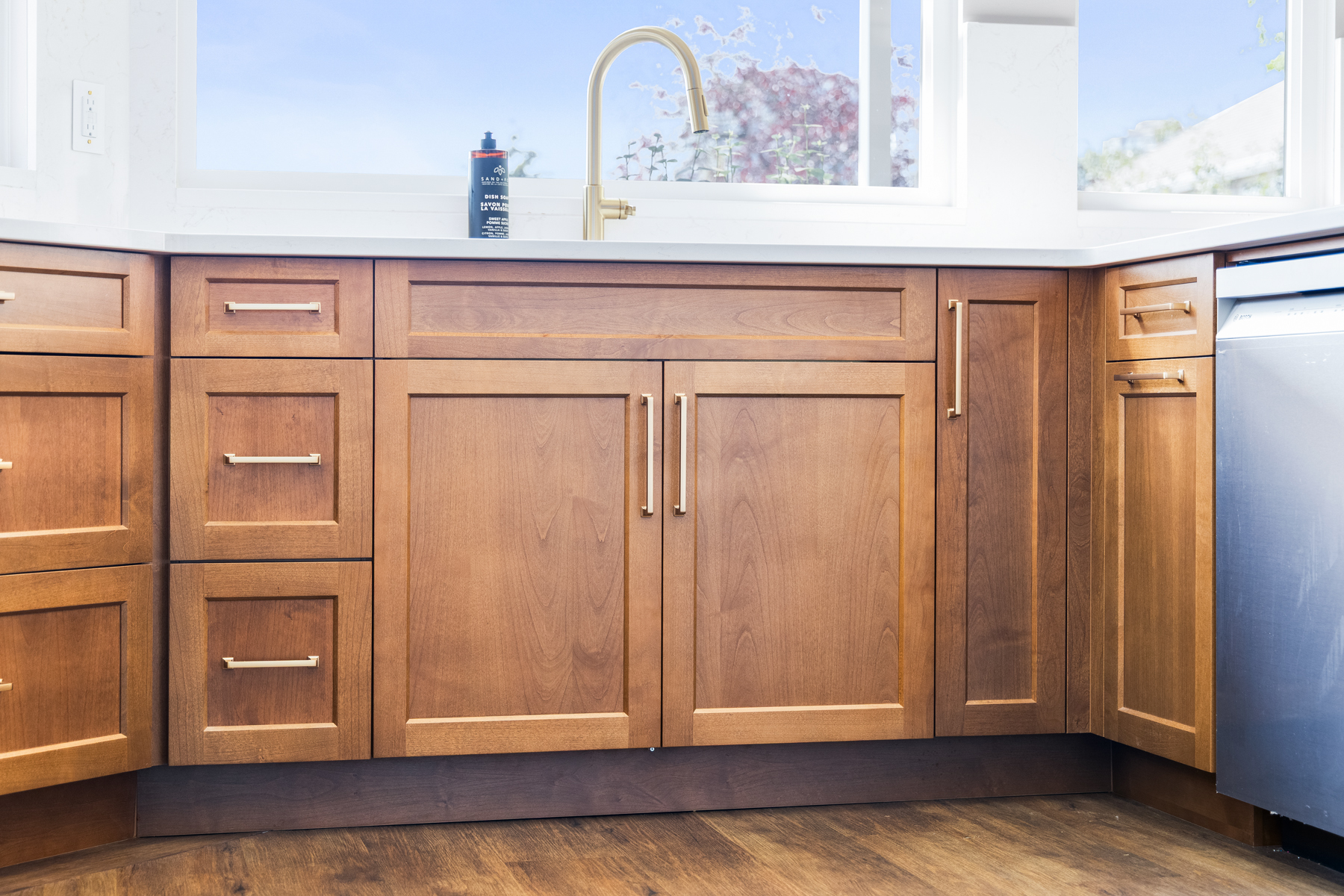
Water does the most damage, and most of it happens at the sink base and dishwasher. Wipe spills at once and dry the surface. Don’t hang damp dish towels over the doors: MasterBrand and Raywal both warn the moisture can cause peeling and discolouration, and KraftMaid suggests a pull-out towel bar under the sink instead.
Health Canada lists the area around sinks and pipes among the places to check for damp, so look under the sink now and then for slow leaks. If you’re replacing a sink base, our comparison of melamine vs plywood cabinet boxes covers how each handles water.
Heat comes next. Holiday Kitchens advises pulling toasters, coffee makers and similar appliances out from under the cabinets before you use them, and opening nearby doors and drawers during an oven’s self-cleaning cycle. MasterBrand goes further and suggests taking off the doors and drawers closest to the oven before self-cleaning. Thermofoil is the most sensitive: Holiday Kitchens requires metal heat shields beside ovens, ranges and dishwashers on its foil products.
Sunlight changes colour slowly. MasterBrand notes that direct sun darkens most natural wood but lightens walnut, and can fade painted finishes and laminates, high gloss included. Blinds or drapes are the simplest fix.
How do you adjust cabinet hinges and drawers?

Doors drift out of line with use and with the seasons, and MasterBrand notes that a hinge adjustment can tidy a swollen or shrunken door until it settles. Start by tightening any loose hinge or pull screws, turning clockwise with a screwdriver that fits the head.
Concealed hinges such as Blum’s adjust three ways. On Blum’s CLIP and CLIP top hinges:
- Side, which sets the gap between doors: turn the front screw on the hinge arm, about 2 mm (5/64 in) either way.
- Height: turn the cam on the mounting plate, or loosen the plate screws, move the door and retighten, again about 2 mm.
- Depth, which sets how far the door sits off the box: turn the rear cam screw, 3 mm (1/8 in) one way and 2 mm the other.
Make a small turn, close the door and look before turning again. MasterBrand’s adjustment guide says fine-tuning can take a few tries.
Most undermount drawer slides adjust too. MasterBrand describes a tab on the locking device under the drawer: slide it toward the back to raise that side. Blum’s MOVENTO runners, used in our FDC Signature line, let you adjust the front in four directions without tools. To clean any runner, Blum suggests vacuuming out crumbs and wiping with a moist, not wet, cloth.
If a door rubs, won’t stay shut, or a screw spins in its hole, call us before forcing it. Merit’s warranty depends on our installers doing the original install, as our FAQ explains.
How do you fix scratches and chips?
MasterBrand describes the usual touch-up kit, colour-matched to your cabinets and ordered through the retailer: a pen for small marks and a tinted putty stick for deeper scratches and nicks. High-gloss acrylic needs its own polish kit, which Showplace says comes from the dealer. When boxes have swollen or the finish is peeling across whole doors, care won’t bring them back, and our guide to refacing vs replacing kitchen cabinets covers the options.
Frequently asked questions
How often should I clean my kitchen cabinets?
Wipe splatters as they happen. If you cook most days, KraftMaid suggests a weekly wipe-down of the doors around the stove, sink and garbage. Cabinets away from the cooking zone can go longer between cleans.
Can I use vinegar or baking soda on kitchen cabinets?
We’d skip both. Holiday Kitchens lists acids among cleaners that can mar laminate and baking soda among those to avoid on thermofoil. Warm water with a little dish soap handles nearly all kitchen grease.
Should I polish or wax my cabinets?
No. MasterBrand says cabinets don’t need wax and that polish build-up can leave them hazy or yellowed, and KraftMaid advises against wax polishes, petroleum solvents and silicones.
How do I get grease off the cabinets above the stove?
Use warm water with a little dishwashing liquid, about 5% liquid to 95% water as MasterBrand suggests. Wipe, go over it with a clean damp cloth and dry. On thermofoil, leave brushes and abrasive cleaners out of it.
Why won’t my cabinet doors line up anymore?
Usually it’s loose hinge screws or a swing in humidity. Tighten the screws, check that the hygrometer reads between 30% and 50%, then use the side and height adjustments above.
Sources
- Health Canada: Mould (modified February 13, 2023)
- MasterBrand Cabinets: The Homeowner’s Guide to Care and Cleaning (accessed November 2026)
- MasterBrand Cabinets: Humidification Education (accessed November 2026)
- MasterBrand Cabinets: Adjusting Cabinets (accessed November 2026)
- MasterBrand Cabinets: Cabinet Construction (accessed November 2026)
- KraftMaid: Dos and Don’ts of Kitchen Cabinet Cleaning and Care (accessed November 2026)
- Holiday Kitchens: Thermofoil Care (accessed November 2026)
- Holiday Kitchens: Wood and Laminate Care (accessed November 2026)
- Raywal Cabinets: Kitchen Care (accessed November 2026)
- Showplace Cabinetry: How to Care for Acrylic Surface Cabinets (accessed November 2026)
- Blum: Clip and Clip Top hinge product sheet (version 12-2004, hosted by Richelieu)
- Blum: CLIP top BLUMOTION overview (accessed November 2026)
- Blum: MOVENTO overview (accessed November 2026)
- Blum: How to best clean Blum fittings (March 25, 2019)
- Final Draft Cabinetry: FAQ (accessed November 2026)
Last reviewed November 2026.
When your cabinets need more than a tune-up
If your cabinets are past adjusting, see the kitchen cabinets we design and install, and request a free design estimate for a plan drawn around your kitchen.
Final Draft Cabinetry is a kitchen and bath design studio in Burnaby, BC, serving Greater Vancouver and Calgary. We design, order, deliver and install cabinetry from Merit Kitchens, Lectus, Access and our own FDC Signature line, which is built in the Lower Mainland.