

Bathroom Vanity Installation in Calgary: Permits, Trades and the Step-by-Step Process
A bathroom vanity installation in Calgary usually doesn’t need a permit when the new sink connects to the same drain and water lines, because the City doesn’t require a plumbing permit to replace existing faucets and fixtures. Moving the drain, adding a second sink or running new wiring does need one, pulled by whoever does that work. The install runs in stages: the vanity goes in, the countertop is templated and installed (2 to 3 weeks for stone), and then a plumber makes the connections.
This post covers the installation process. Pricing and the stock versus custom choice are in the true cost of bathroom vanities in Calgary, and blocking and drain heights for floating units are in our floating vanity installation guide.
Vanity installation at a glance
| Step | Who does it | Timing |
|---|---|---|
| Order the vanity | Final Draft Cabinetry | About 6 to 8 weeks for BC-built lines, 1 to 3 weeks for Access |
| Shut off water, remove the old vanity | Usually your plumber or contractor | Before install day |
| Set, level, scribe and fasten the vanity | Our installer | Install day |
| Template the countertop | Countertop fabricator | As close to the start of the install as possible |
| Fabricate and install the top | Countertop fabricator | Up to 10 days for laminate, 2 to 3 weeks for stone |
| Connect faucet, drain and supply lines | Licensed plumber | After the top is in |
| New wiring for lights or outlets | Licensed electrician | Before the walls close |
Lead time depends on the line you choose, and our guide to custom vs semi-custom cabinets compares them.
Do you need a permit to replace a vanity in Calgary?

The City of Calgary requires a plumbing permit “when a plumbing system is constructed, extended or altered.” It lists replacing existing faucets and fixtures, repairing a leak and clearing a drain blockage as work that doesn’t need one. A vanity swap where the new sink lands on the same drain and supply lines falls on the no-permit side.
Electrical follows the same logic. A permit is needed for new wiring and for extending or altering a branch circuit, but not when you’re only replacing fixtures. For building permits, the City’s renovation guidance says minor cosmetic upgrades such as finishes, painting and furniture typically don’t need one, while moving or removing walls does.
| Vanity work | Permit needed |
|---|---|
| Swap the vanity on the existing drain and supply lines | None for the plumbing |
| Replace the sink or faucet on the same lines | None |
| Move the drain or water lines | Plumbing permit |
| Change a single vanity to a double (adds a sink) | Plumbing permit |
| Replace a light fixture on existing wiring | None |
| Add a light, outlet or new circuit | Electrical permit |
| Move or remove a wall | Building permit |
Homeowners can take out their own plumbing or electrical permit if they’re the legal owner, live in the home (it can’t be a rental) and do the work themselves. If you hire a contractor, the contractor applies. In apartment-style condos, homeowner permits aren’t available and a licensed contractor has to do the work.
Renovations that need a plumbing permit also fall under the City’s low water use rule, which caps kitchen and bathroom faucets at 5.7 L/min (about 1.5 US gal/min). The City’s pages aren’t legal interpretations, so confirm anything unusual with the City before work starts.
Who can do the plumbing in Alberta?
Alberta.ca lists the National Plumbing Code of Canada 2020 as the plumbing code in force, effective April 1, 2023. Plumber is a designated trade in Alberta, and its restricted activities can only be done by the classes of people the province lists, such as trade certificate holders and registered apprentices.
There’s an exemption for someone working on property they own or control for their own personal, non-profit use, which lines up with the City’s homeowner permit. If you hire someone, they need to be in one of the listed classes. We don’t do plumbing, electrical or ventilation work because we’re not licensed for it, so your plumber handles every connection.
How a vanity installation works, step by step
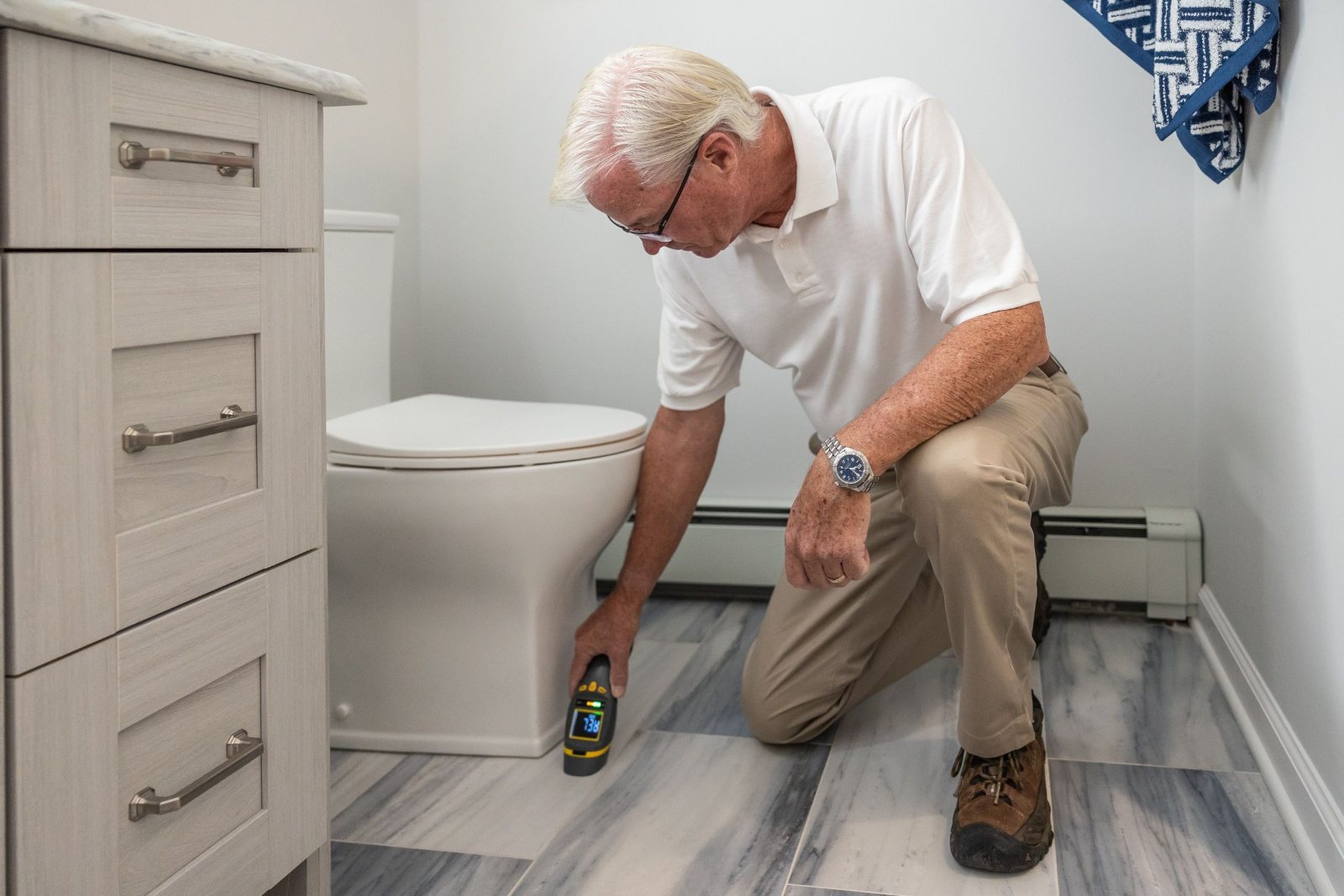
- Shut off and disconnect. The plumber closes the shut-off valves and disconnects the old sink. Tear-out isn’t generally part of our service, though we’ve made exceptions for vanities, so settle who removes the old unit when you book.
- Check the wall and floor. With the old vanity out, look for water damage, check the floor for level and the wall for plumb, and decide whether new flooring runs under the vanity or stops at it.
- Add blocking if it floats. A wall-hung vanity needs solid blocking in the wall before the drywall goes up.
- Set, level and scribe. The installer sets the vanity at the planned height (see bathroom vanity sizes and heights), shims it level and scribes any filler or panel to the wall.
- Fasten and cut openings. The box is screwed to the studs, and openings are cut in the back or bottom for the drain and supply lines.
- Adjust doors and drawers. Hinges and slides get their final adjustment once the box is fixed.
- Template, top, then plumbing. The countertop is templated, made and installed, and then the plumber connects the faucet, P-trap and supply lines, runs water and checks for leaks before the final caulking.
Countertops, sinks and faucets
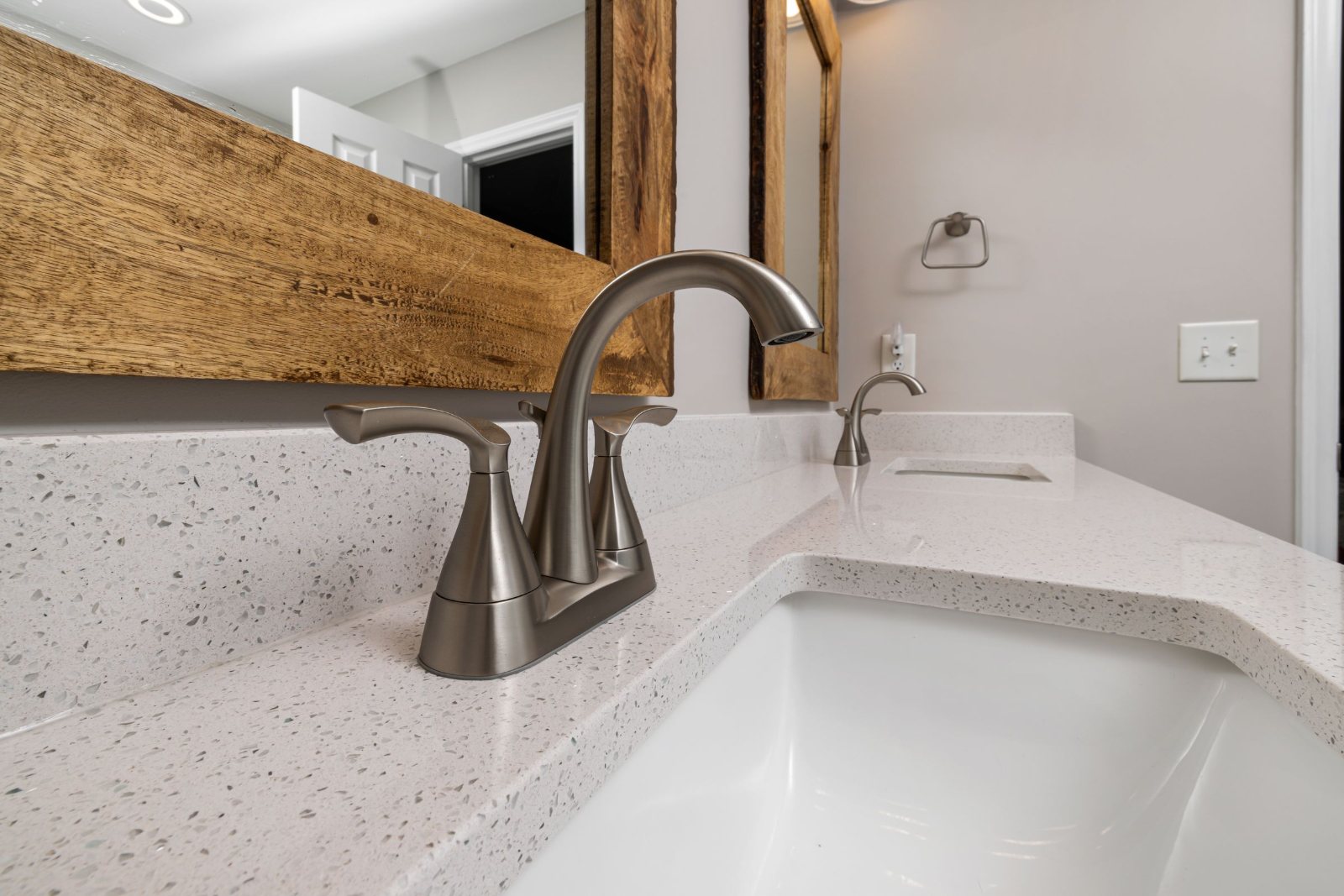
Once we know when the vanity will be delivered, we book the countertop template as close to the start of the install as possible. Your sink and faucet need to be on site for the template. From there, laminate takes up to 10 days to install and stone takes 2 to 3 weeks.
Plan for that gap. The bathroom sink is out of service from install day until the plumber connects it after the top goes in, so a second bathroom makes those weeks easier.
Our partner fabricators template, deliver and install the tops, and if you buy the countertop through us, we arrange those dates. Ask who mounts an undermount sink, the fabricator or the plumber, so nobody waits on the other. Materials are on our countertops in Calgary page.
Calgary’s water is hard. The City’s 2025 data puts hardness at 141 to 200 mg/L (as calcium carbonate) from the Bearspaw plant in the north and 181 to 274 mg/L from Glenmore in the south, with the highest levels from December to February. The City says that leaves mineral build-up on taps and fixtures, so pick a faucet with an aerator you can remove and clean, and wipe the deck dry.
Calgary’s dry winters and your vanity

Health Canada recommends keeping indoor relative humidity between 30% and 50%. Natural Resources Canada notes that condensation risk rises as the weather gets colder and indoor humidity goes up, so in a cold snap, if the windows fog, run nearer the low end of that range.
Wood moves with the air. Thomasville, a MasterBrand cabinet line, says indoor humidity in extremely cold, dry winters can sit below 20% for weeks, shrinking doors and centre panels and separating joints, especially on mitred doors. It also asks for cabinets to acclimate in their new room for a few days before installation.
On five-piece doors, that shows up as centre panels shrinking in their frames. Run the bathroom fan after showers, and in winter keep a humidifier set within Health Canada’s range.
What a vanity install quote should include
- The vanity, delivery and installation, with fillers, panels and hardware adjustment listed.
- The countertop template, fabrication and install, if you buy the top through us.
- What’s excluded, in writing. Ask about tear-out, wall repair, tile, paint, plumbing, electrical and ventilation; we don’t provide the last three.
- Who pulls each permit. In Calgary, a contractor doing the work applies for it.
- Insurance. Our Calgary pages list full coverage with WCB Alberta.
Frequently asked questions
Do I need a permit to replace a bathroom vanity in Calgary?
Not usually, if the new sink connects to the same drain and supply lines, since the City doesn’t require a plumbing permit to replace existing fixtures. Moving the drain, adding a sink or adding wiring does need a permit.
Can I install a bathroom vanity myself in Calgary?
Yes, if you own and live in the home: Calgary’s homeowner permits and Alberta’s trade rules both allow you to do the work on your own home yourself. If you buy Merit Kitchens cabinets from us, though, one of our installers has to install them for the Merit warranty to be valid.
How long does a vanity installation take?
The vanity is set first, and then the top follows: up to 10 days after the template for laminate and 2 to 3 weeks for stone. The plumber connects everything once the top is in, so plan on the sink being out of use for that stretch.
Who connects the plumbing after the vanity is installed?
A licensed plumber. We don’t do plumbing or electrical work, and plumbing is a designated trade in Alberta, so the faucet, P-trap and leak test belong to your plumber.
Does Calgary’s hard water affect a new vanity?
Mostly at the faucet. The City says hard water leaves a build-up of minerals on taps and other fixtures, so choose a faucet with a removable aerator and wipe the deck dry after use.
Sources
- City of Calgary: Homeowner electrical and plumbing permits (viewed November 2026)
- City of Calgary: Home renovations and basements (viewed November 2026)
- City of Calgary: Low water use toilets and faucets (viewed November 2026)
- City of Calgary: Water quality, water hardness and water data (2025 data)
- Government of Alberta: Plumbing codes and standards (viewed November 2026)
- Government of Alberta, Tradesecrets: Classes of Individuals: Plumber (viewed November 2026)
- Health Canada: Guide to addressing moisture and mould indoors (viewed November 2026)
- Natural Resources Canada: Condensation (modified January 2025)
- Thomasville Cabinetry: Humidification Guide for Cabinets (viewed November 2026)
- Final Draft Cabinetry: Frequently Asked Questions and Custom Bathroom Vanities in Calgary (viewed November 2026)
Last reviewed November 2026.
Plan your Calgary vanity install
Start with our bathroom vanities in Calgary, then request a free Calgary estimate, on site if you prefer, and we’ll plan the install around your plumber and fabricator.
Final Draft Cabinetry is a kitchen and bath design studio in Burnaby, BC, serving Greater Vancouver and Calgary. We design, order, deliver and install cabinetry from Merit Kitchens, Lectus, Access and our own FDC Signature line, which is built in the Lower Mainland.








