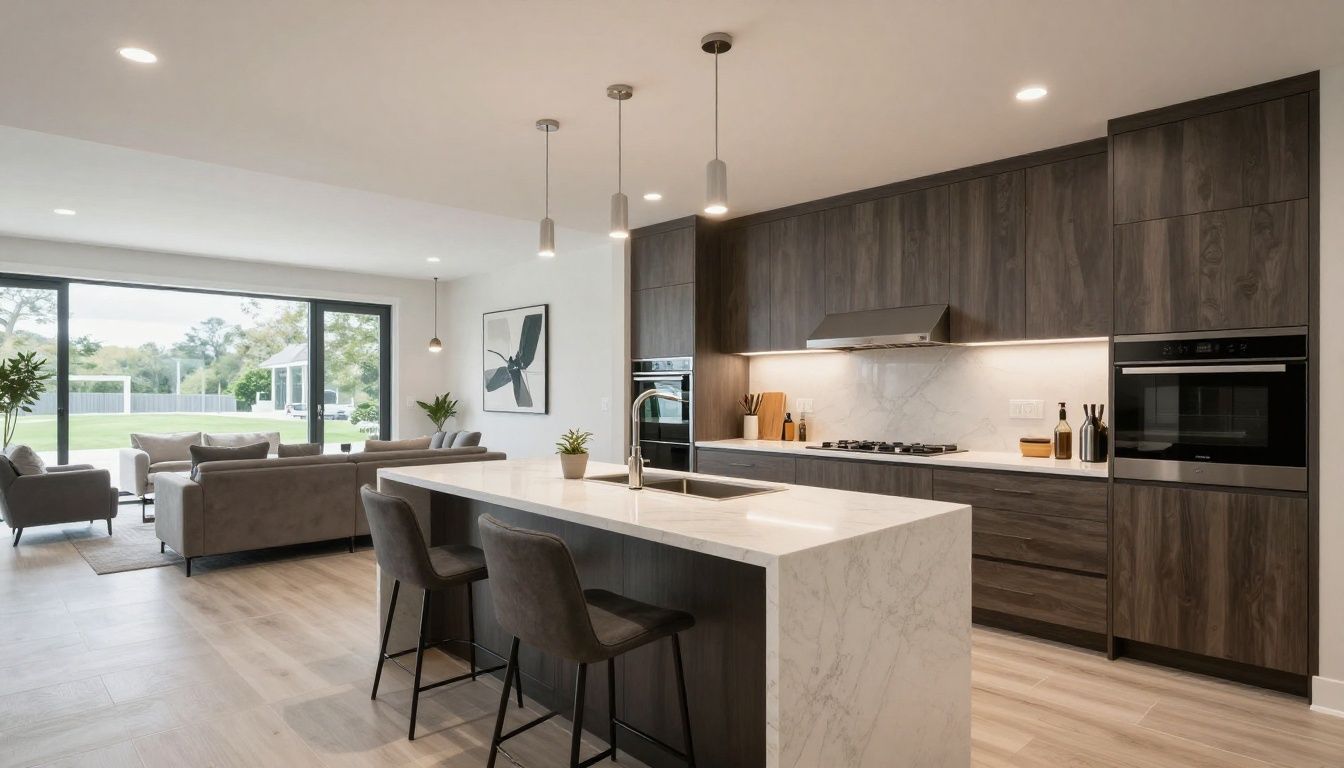
How Much Does a Kitchen Renovation Cost in Canada? 2026 Price Breakdown
A mid-range Canadian kitchen renovation in 2026 commonly lands between $35,000 and $75,000 before tax, while a cabinet-only refresh may cost $12,000–$30,000 and a high-end custom project can exceed $100,000. The expensive mistake is budgeting from cabinet prices alone: demolition, electrical, plumbing, installation, countertops, permits, design, and tax can add 40%–60% to the cabinet figure.
The direct answer to kitchen renovation cost Canada searches is this: plan around the scope, not a national average. A cosmetic update and a full layout change are different construction projects. The ranges below are realistic planning figures for 2026, with the main cost drivers identified so a written quote can be compared properly.
Key takeaways
- A cabinet refresh generally costs $12,000–$30,000, depending on door replacement, painting, hardware, and installation.
- A standard full kitchen renovation generally costs $35,000–$75,000, including cabinets, counters, labour, and typical services.
- A high-end custom kitchen commonly costs $75,000–$150,000 or more, especially with layout changes, millwork, premium appliances, and complex materials.
- Cabinetry usually represents 30%–40% of the project total; labour, countertops, appliances, and site work make up the balance.
- A reliable quote should identify quantities, materials, installation assumptions, exclusions, taxes, allowances, and change-order rates.

What is the average kitchen renovation cost in Canada in 2026?
A reasonable national planning range for a complete kitchen renovation is $35,000–$75,000 before tax. That range assumes a typical kitchen with new cabinetry, a new countertop, updated lighting or electrical work, flooring repairs or replacement, and professional installation. It does not automatically include premium appliances, structural changes, or extensive plumbing relocation.
The average cost of kitchen renovation in Canada rises quickly when the layout changes. Moving a sink, gas line, or electrical service can require several trades, additional permits, drywall repairs, and a longer installation schedule. Keeping plumbing and appliances in their existing positions is usually the single most effective way to control cost without reducing cabinet quality.
For early budgeting, use the following scope bands. They are deliberately broad enough to account for Canadian labour markets and material differences, but specific enough to guide a first conversation.
| Renovation scope | Typical 2026 cost before tax | Typical duration | What it usually includes |
|---|---|---|---|
| Cabinet refresh | $12,000–$30,000 | 1–3 weeks | New doors or painted fronts, hardware, limited cabinet work, possible new counter |
| Standard full renovation | $35,000–$75,000 | 4–8 weeks | Cabinets, countertop, installation, demolition, electrical or plumbing updates, finishing |
| Custom renovation | $55,000–$100,000 | 6–12 weeks | Site-specific cabinetry, upgraded storage, detailed millwork, premium finishes |
| High-end custom renovation | $75,000–$150,000+ | 8–16 weeks | Custom cabinetry, layout changes, premium appliances, specialty materials, complex details |
These figures are planning ranges, not fixed prices. A small kitchen with difficult access, extensive levelling, or expensive appliances can cost more than a larger, straightforward room. Tax rates, permit requirements, building access, and local labour rates also vary by province and municipality.
For a more location-specific comparison, review this breakdown of kitchen renovation costs in Vancouver and the associated assumptions around labour and materials.
Which line items take the largest share of the budget?
Cabinetry is usually the largest single material category, but it is not the entire project. In a properly scoped renovation, cabinetry often represents 30%–40% of the total, installation accounts for roughly 10%–20%, and countertops account for approximately 8%–15%. The percentages shift with appliance selection, structural work, and the amount of custom fabrication.
The table below uses a $60,000 renovation as an example. It shows budget allocation rather than a guaranteed quote.
| Line item | Typical share | Example on a $60,000 project | What moves the cost |
|---|---|---|---|
| Cabinetry and hardware | 30%–40% | $18,000–$24,000 | Box construction, finish, drawer count, accessories, custom sizing |
| Cabinet installation | 10%–15% | $6,000–$9,000 | Number of units, fillers, panels, scribing, site conditions |
| Countertops and fabrication | 8%–15% | $4,800–$9,000 | Material, thickness, edge, sink cutouts, seams, backsplash |
| Demolition and disposal | 3%–7% | $1,800–$4,200 | Cabinet attachment, flooring, tile, disposal access |
| Electrical and lighting | 5%–12% | $3,000–$7,200 | New circuits, pot lights, code corrections, panel capacity |
| Plumbing and gas | 3%–10% | $1,800–$6,000 | Fixture relocation, shutoffs, dishwasher or gas changes |
| Flooring, drywall, paint, finishing | 8%–15% | $4,800–$9,000 | Area, substrate repair, tile, trim, ceiling work |
| Design, permits, delivery, contingency | 5%–12% | $3,000–$7,200 | Design complexity, municipal approvals, unknown site conditions |

A quote that lists only “kitchen cabinets: $20,000” is incomplete. Ask if the number includes fillers, finished end panels, toe kicks, crown or light valance, internal accessories, delivery, installation, and taxes. Those items can add several thousand dollars when they are omitted from the initial allowance.
How much do new kitchen cabinets cost in Canada?
The cost of new kitchen cabinets is commonly $15,000–$35,000 installed for a standard kitchen and $30,000–$60,000 or more for detailed custom cabinetry. The range depends less on the room’s floor area than on the number of cabinet boxes, drawer banks, finished panels, tall units, material choices, and fitting requirements.
Stock cabinets are manufactured in fixed sizes and can be the lowest-cost option, generally around $8,000–$18,000 installed for a modest kitchen. They work best where walls are straight, dimensions are conventional, and filler space is acceptable. They become less economical if installers need to modify many units or disguise large gaps.
Semi-custom cabinets typically fall around $15,000–$30,000 installed. They offer more door styles, finishes, depths, and accessories than stock products, but still rely on a manufacturer’s size grid. Lead times and available modifications vary by supplier.
Custom cabinets are built around measured site conditions. A common planning range is $25,000–$60,000 installed, with higher totals for walnut, specialty lacquer, integrated appliances, curved components, elaborate islands, or matching millwork. Custom work earns its cost where the room has angled walls, unusual bulkheads, limited clearance, or a strong need for specific storage dimensions. It is poor value if the design uses standard boxes and no site-specific features.
Cabinet construction also matters. A cabinet box is the structural enclosure behind the doors and drawers. Plywood can tolerate fastening and moisture exposure differently from particleboard, but either can perform adequately when engineered and installed correctly. Look at joinery, backs, drawer hardware, adjustable legs, finish quality, and the installation method rather than relying on one material label.
A useful reference for evaluating this decision is are custom cabinets worth it, particularly when comparing storage efficiency against the initial price.
What costs less: refreshing cabinets or replacing them?
A cabinet refresh costs less when the existing boxes are square, secure, dry, and arranged in a workable layout. Replacing doors and drawer fronts, updating hardware, repainting, and adding a new countertop may cost $12,000–$25,000. A more involved refresh with cabinet modifications, new drawer systems, and refinishing can reach $30,000.
A refresh fails when the boxes have water damage, poor spacing, failing hinges, or a layout that wastes the room. New doors cannot correct an awkward sink location or create storage where no cabinet volume exists. Replacement is generally justified when more than a few boxes need repair, the existing material cannot hold new hardware, or the kitchen requires a different workflow.
A practical example
Consider a 10-by-12-foot kitchen with sound cabinet boxes but dated doors and a peninsula that blocks circulation. Replacing the fronts may cost $16,000, but it leaves the traffic problem unresolved. If removing the peninsula and rebuilding the base run requires $28,000, the higher figure buys a functional change rather than a cosmetic one; the homeowner should compare those outcomes, not just the two totals.
What makes a Canadian kitchen renovation more expensive?
The biggest cost increases come from layout changes, site conditions, access, and finish complexity. Room size matters, but it is rarely the only deciding factor.
Moving plumbing, electrical, or gas
Keeping the sink, dishwasher, range, and refrigerator near existing services can save $2,000–$10,000 or more. Moving a gas range may involve a licensed gas fitter, permit requirements, ventilation changes, and wall or floor access. Relocating a sink can require new drain slope, venting, shutoffs, and repairs below the floor.
Electrical work ranges from $2,000–$7,500 for common upgrades. Costs increase if the panel lacks capacity, circuits must be added through finished areas, or the renovation brings older wiring up to current requirements. The electrician should identify dedicated circuits for appliances and the required receptacle and lighting locations before cabinetry is finalized.
Choosing more drawers and accessories
Deep drawer boxes, pull-out pantry units, waste-sorting systems, tray dividers, appliance lifts, and corner mechanisms improve access but add hardware and installation time. A drawer bank may cost several hundred dollars more than a basic door cabinet, while specialized accessories can add $500–$2,000 each.
Use accessories where they solve a daily problem. Filling every cabinet with mechanisms increases cost and creates more moving parts to maintain.
Selecting countertops and backsplash materials
Laminate can keep a project near $2,500–$5,000 for a typical kitchen. Quartz and granite commonly fall around $5,000–$10,000, while porcelain, natural stone slabs, thicker edges, waterfall ends, and complex seams can push fabrication beyond $12,000.
Price is affected by slab yield, not just countertop square footage. A large island may require a second slab if the pattern, veining, or structural limits prevent efficient layout. Sink cutouts, cooktop openings, laminated edges, and backsplash height also need to be listed.

Encountering concealed damage
Water damage under a sink, uneven subfloors, deteriorated drywall, asbestos-containing materials, and outdated wiring are common renovation risks. A reasonable contingency is 10%–15% of the planned construction budget. Older homes and projects involving demolition to framing may warrant more.
A contingency is not a discount or a hidden fee. It is money reserved for conditions that cannot be priced accurately until surfaces are opened.
Does location change the kitchen remodel cost in Canada?
Yes. Labour rates, housing stock, logistics, permit processes, and access conditions make regional pricing different. The same cabinet package may require more installation time in a downtown condominium than in a detached home with a driveway and ground-level entry.
In Metro Vancouver, a standard renovation commonly falls toward the middle or upper part of the national range because labour, parking, delivery coordination, and older housing conditions can add time. Custom projects in Vancouver, Burnaby, and nearby municipalities frequently begin around $55,000 and can exceed $100,000 with extensive millwork or layout work.
In Calgary, detached homes may offer easier material access, but larger kitchens, basement service routes, gas work, and premium finish selections can still raise the total. A practical 2026 planning range for a standard Calgary renovation is $35,000–$70,000, with custom projects commonly reaching $75,000–$130,000 or more. These are planning figures, not municipal price schedules; the property and specification control the final number.
For a Calgary-specific scope comparison, use these realistic Calgary kitchen renovation budget ranges alongside an itemized quote.
What should a written kitchen renovation quote include?
A useful quote identifies what is being built, who is responsible for each trade, and what happens when the scope changes. It should not rely on a single lump sum with broad allowances.
At minimum, check for:
- A measured plan or clear cabinet elevation identifying every unit, filler, panel, and opening.
- Cabinet materials, construction details, finish, hardware, drawer specifications, and warranty terms.
- Countertop material, thickness, edge profile, sink and cooktop cutouts, seams, backsplash, delivery, and installation.
- Demolition, disposal, floor and wall protection, delivery conditions, and site cleanup.
- Electrical, plumbing, gas, ventilation, drywall, flooring, painting, permits, inspections, and trade coordination.
- Appliance responsibilities, including supply, delivery, panel requirements, connection, and disposal of old units.
- A schedule showing design approval, ordering, fabrication, delivery, installation, countertop templating, and final completion.
- Tax treatment, payment schedule, allowances, exclusions, change-order process, and hourly rates for extra work.
Allowances deserve particular attention. An allowance is a placeholder amount for an item not yet selected, such as a faucet or appliance. A low allowance makes the quote appear cheaper, but the difference becomes payable when the actual product is chosen. Compare allowances line by line rather than comparing only the quoted total.
How is a custom kitchen actually built and installed?
Custom cabinetry begins with a site measure, not a door-style selection. The cabinetmaker records wall lengths, ceiling height, corners, windows, plumbing, electrical points, appliance specifications, floor levels, and obstructions. Those measurements are converted into a coordinated plan before fabrication begins.
The design is then checked against appliance clearances and installation requirements. For example, a refrigerator door may need a filler to open without striking a wall, while an island requires enough passage space for doors and people to operate safely. The NKBA kitchen planning guidelines are a useful reference for general planning, but appliance manufacturers’ installation instructions govern the actual product clearances.
Fabrication typically involves cutting panels, applying edge treatment, machining joinery, finishing doors and exposed parts, assembling boxes, and preparing hardware. Site-built scribing may still be needed. Scribing means fitting a panel or filler to follow an uneven wall instead of leaving a visible gap; older Canadian homes often require it.
Installation begins after demolition and rough-in work are complete. Cabinets are levelled, fastened to suitable structure, aligned, and adjusted. Countertops are templated after the cabinet run is fixed, then fabricated and installed. The sequence matters: a rushed countertop template or an unlevel cabinet run can create visible seams, appliance fit problems, and expensive rework.
Cabinet prices in 2026 also depend on whether the boxes are built in Canada or imported, so read what Canada’s 25% cabinet tariff changes for a kitchen or bathroom renovation in BC and Alberta before you lock a quote.

How long should a kitchen renovation take?
A cabinet refresh may take one to three weeks on site. A full renovation commonly takes four to eight weeks, while a custom project with layout changes and detailed millwork can require six to sixteen weeks. The calendar may be longer if design, approvals, fabrication, or appliance delivery occur in separate stages.
| Project stage | Typical time | Main causes of delay |
|---|---|---|
| Design and site measure | 1–3 weeks | Revisions, appliance decisions, incomplete measurements |
| Permits and engineering, if required | 1–6+ weeks | Municipality, structural changes, gas or electrical scope |
| Cabinet fabrication | 4–10 weeks | Finish, custom parts, supplier capacity, revisions after approval |
| Demolition and rough-ins | 3–10 days | Hidden damage, inspections, service relocation |
| Cabinet installation | 3–7 days | Number of units, scribing, levelling, panel work |
| Countertop template and install | 1–3 weeks | Fabrication queue, material availability, complex edges |
| Finish trades and deficiencies | 3–10 days | Paint, backsplash, flooring, hardware, corrections |
Do not schedule the final appliance delivery immediately after cabinet installation. Allow time for countertop fabrication, connections, door adjustments, and deficiency work. A written schedule should identify which dates depend on homeowner selections and supplier lead times.
How can you control the average cost of a new kitchen?
The most reliable savings come from reducing avoidable site work, not from choosing the cheapest cabinet components. Keep the plumbing and electrical layout where possible, finalize appliances before cabinet production, and approve drawings before anything is ordered.
Prioritize spending on cabinet construction, drawer hardware, installation accuracy, and surfaces that receive daily wear. Save by limiting specialty accessories, selecting a countertop with efficient slab yield, using a standard island shape, and avoiding unnecessary structural changes. Do not remove installation, ventilation, or electrical allowances simply to hit an early target; those costs return later as change orders.
A design consultation should produce decisions, not just images. Ask for cabinet elevations, appliance specifications, finish samples, a scope of work, and a budget separated into cabinetry, trades, counters, and exclusions. Comparing two quotes becomes possible only after both contractors are pricing the same scope.

Final answer: what should you budget for a Canadian kitchen renovation?
For 2026, budget $12,000–$30,000 for a cabinet refresh, $35,000–$75,000 for a standard full renovation, and $75,000–$150,000 or more for high-end custom work. The final kitchen renovation cost in Canada will depend primarily on cabinetry specification, layout changes, service upgrades, access, countertop fabrication, and the completeness of the quote.
A serious budget should include a 10%–15% contingency and should distinguish product allowances from fixed prices. If the room has difficult walls, unusual dimensions, or storage requirements that stock units cannot meet, bring in a custom cabinetry shop before the layout and budget are locked. Final Draft Cabinetry can review the scope and prepare a measured proposal without treating the first conversation as a commitment.
FAQ
Is $20,000 enough for a kitchen renovation in Canada?
$20,000 can cover a limited cabinet refresh, modest stock cabinetry, or a smaller kitchen with minimal trade work. It is usually not enough for a complete renovation involving new cabinets, countertops, electrical, plumbing, demolition, installation, and finishing. Appliance purchases and taxes may also sit outside that figure.
Does a kitchen renovation increase home value in Canada?
A renovation can improve marketability and usability, but the return is not guaranteed and rarely equals every dollar spent. Value depends on workmanship, the surrounding market, the original condition, and whether the design suits the home. Overbuilding for the neighbourhood can reduce financial return even if the work is technically excellent.
Should appliances be purchased before kitchen cabinets?
Appliances should be selected, or at least specified by exact model and dimensions, before cabinet drawings are approved. Door swing, ventilation, panel requirements, electrical circuits, and opening sizes depend on those details. A replacement appliance with different dimensions can force cabinet changes after fabrication, creating avoidable cost.
Are kitchen renovation costs tax deductible in Canada?
Most personal kitchen renovations are not directly tax deductible. Certain renovations may qualify under specific accessibility, rental-property, business-use, or provincial programs, but eligibility changes and depends on documentation. Ask a qualified Canadian tax professional before assuming that materials or labour can be claimed.
What is the most expensive part of a kitchen renovation?
Cabinetry is often the largest single category, especially with custom sizing, panels, drawers, and specialty finishes. The total can be exceeded by structural changes, service relocation, or premium appliances. Installation and trade coordination also have a substantial cost because several components must be completed in the correct sequence.
How much contingency should I keep for a kitchen remodel?
Keep 10%–15% of the planned construction budget for a typical renovation, and consider more for older homes or projects involving demolition to framing. The contingency covers concealed conditions such as water damage, uneven floors, wiring corrections, and plumbing problems. It should remain separate from the cabinet and appliance allowances.