The Secret to a Functional Kitchen: Understanding Workflow & Cabinet Placement
A beautiful kitchen is a wonderful thing, but a kitchen that works beautifully is life-changing. The secret to a truly functional kitchen lies in its workflow, the way you move and operate within the space as you cook, clean, and live. Even the most stunning cabinetry and high-end appliances can lead to frustration if the layout is inefficient. For homeowners in Vancouver and Calgary, creating a kitchen that supports a busy lifestyle is paramount.
At the heart of a great kitchen layout is the strategic placement of your cabinets and appliances. This isn’t just about fitting everything in; it’s about creating a logical and ergonomic flow that makes every task easier. At Final Draft Cabinetry, we design kitchens from the inside out, focusing on functionality first. Let’s explore the core principles of kitchen workflow and how smart cabinet placement can revolutionize your space.
The Foundation: The Kitchen Work Triangle
You’ve likely heard of the kitchen work triangle. It’s a classic design principle that has been guiding kitchen layouts for decades. The concept is simple: the three main work areas of the kitchen—the sink, the refrigerator, and the stove—should form a triangle.
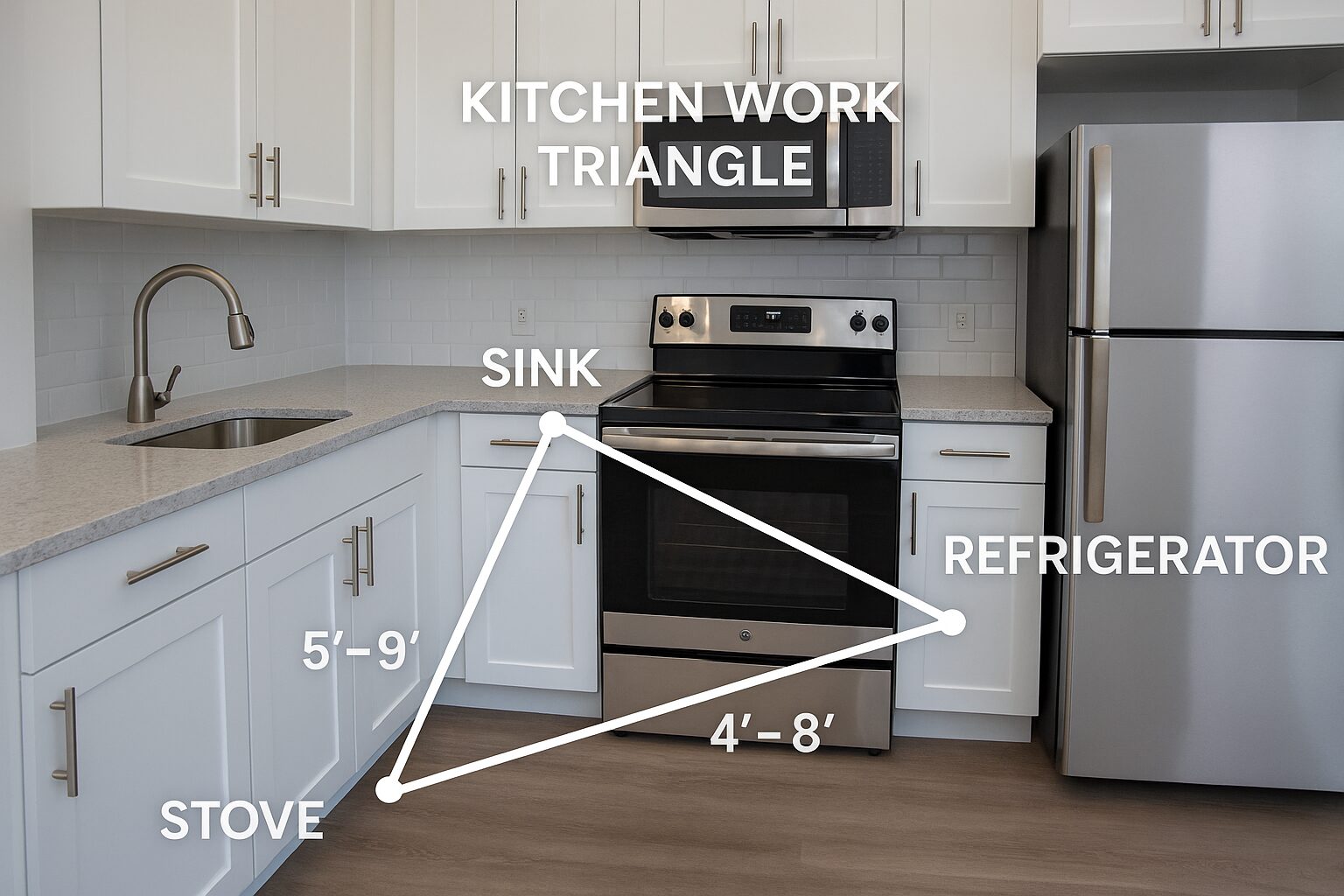 The rules of the triangle are:
- Each leg of the triangle should be between 4 and 9 feet long.
- The total length of all three sides should be between 13 and 26 feet.
- The triangle should not be obstructed by major traffic flow or obstacles like an island.
This principle is designed to minimize the steps you take between your key work areas, making your kitchen more efficient.
Evolving the Triangle: The Rise of Work Zones
While the work triangle is still a valuable guideline, modern kitchens have evolved. Today, we often have more than one cook, and our kitchens are used for much more than just cooking. This has led to the development of a more nuanced approach: work zones.
The work zone concept expands on the triangle by creating distinct areas for specific tasks. The primary zones include:
- Prep Zone: This is your main countertop workspace, ideally located between the sink and the refrigerator. Your cabinets in this zone should store mixing bowls, cutting boards, knives, and other prep tools.
- Cooking Zone: This area includes the stove, oven, and microwave. Cabinets here should house pots, pans, baking sheets, and cooking utensils.
- Cleaning Zone: Centered around the sink and dishwasher, this zone’s cabinets should store dish soap, cleaning supplies, and your everyday dishes and cutlery for easy unloading.
- Storage Zone: This includes the pantry and refrigerator, for both dry and cold food storage.
 The Role of Cabinet Placement in a Seamless Workflow
Once you’ve established your zones, the key is to use your cabinet placement to support them. This means storing items at their point of use.
- Store dishes near the dishwasher. This makes unloading a quick and simple task.
- Keep pots and pans next to the stove. You shouldn’t have to walk across the kitchen to grab a frying pan.
- Place glassware near the refrigerator for easy access to drinks.
- Organize your prep tools in the drawers and cabinets closest to your main prep counter.
This logical approach to storage eliminates unnecessary steps and creates a more intuitive and ergonomic kitchen. Explore our portfolio to see how we apply these principles in our custom designs.
Don’t Forget Traffic Flow
A functional kitchen is also a safe kitchen. Your layout should allow for clear traffic flow, so people can move through the space without getting in the cook’s way. Walkways should be at least 36 inches wide, and in a multi-cook kitchen, 42 to 48 inches is even better.
 Ergonomics and Accessibility
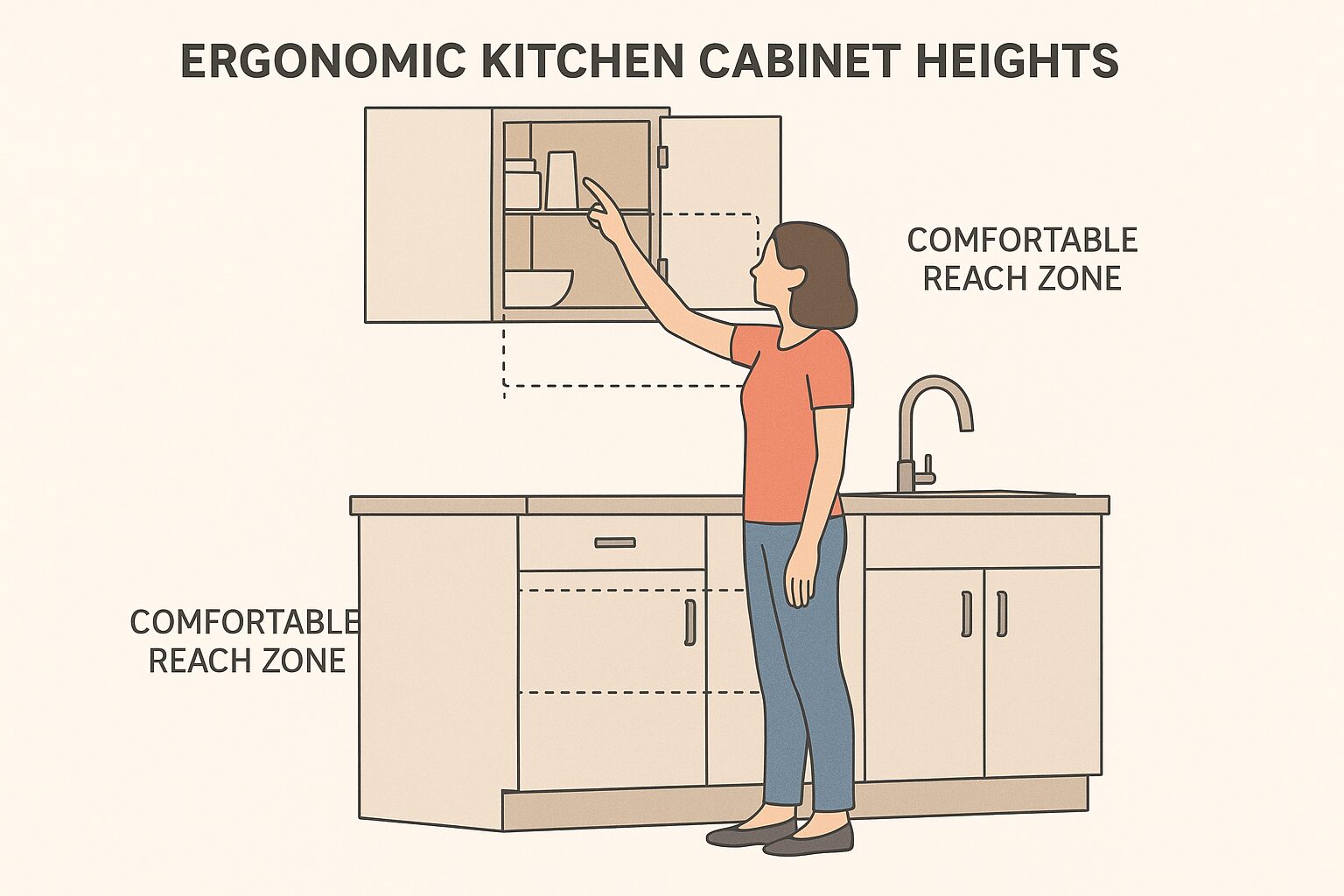
Finally, consider the ergonomics of your cabinet placement. Store frequently used items at the most accessible heights—between your shoulders and your knees. Less-used items can go in the highest upper cabinets or the lowest base cabinets.
 Design a Kitchen That Works for You
A kitchen that is designed with workflow in mind is a kitchen that you will love to use every single day. By thinking strategically about the placement of your cabinets and the flow of your space, you can create a kitchen that is not only beautiful but also a model of efficiency. At Final Draft Cabinetry, our expertise lies in creating custom solutions that are perfectly tailored to your space and your lifestyle.
Ready to design a kitchen that truly works for you? Contact us today for a free design consultation in Vancouver or Calgary. And for more expert tips, be sure to visit our blog.

Recommended Posts