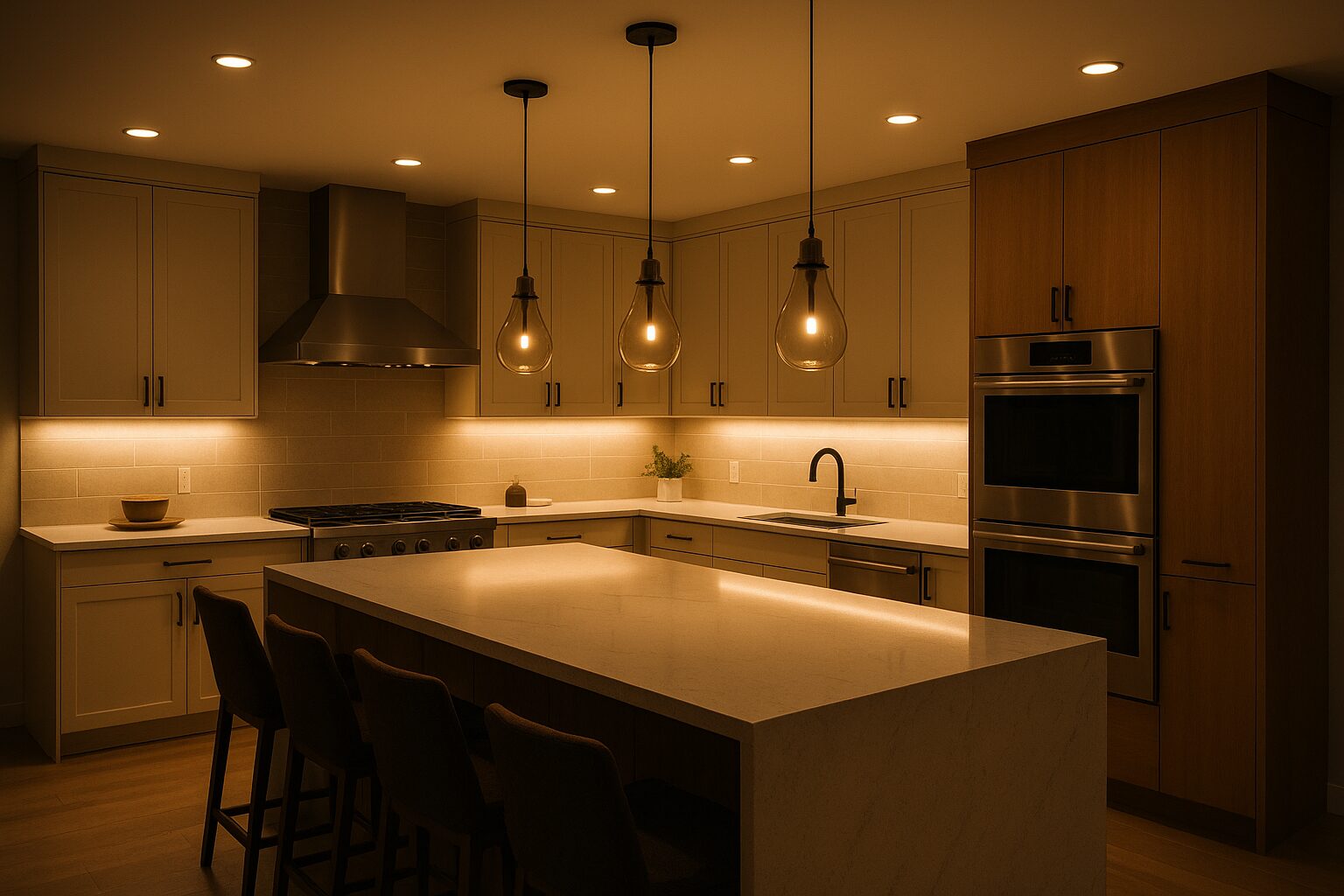
Illuminating Your Investment: Expert Kitchen Lighting Design for Custom Cabinetry
Illuminating Your Investment: Expert Kitchen Lighting Design for Custom Cabinetry
A well-designed kitchen is more than just beautiful cabinetry and premium countertops; it’s a space that functions seamlessly and feels inviting. One of the most critical, yet often overlooked, elements in achieving this balance is lighting. Expertly planned kitchen lighting does more than just illuminate your workspace—it sets the mood, highlights architectural details, and enhances the beauty of your custom cabinetry. For homeowners undertaking a kitchen renovation, thinking about lighting as an integral part of the design from the very beginning is the key to creating a truly exceptional space.
In today’s kitchens, a single overhead fixture is no longer sufficient. The secret to a perfectly lit kitchen lies in a layered approach, combining different types of lighting to serve distinct purposes. This strategy involves blending ambient, task, and accent lighting to create a flexible and dynamic environment that adapts to your needs, whether you’re prepping a family meal, entertaining guests, or enjoying a quiet morning coffee. Let’s explore how you can illuminate your investment and bring your kitchen to life with a professional lighting plan.
The Three Layers of Kitchen Lighting
A successful lighting scheme is built on three fundamental layers, each playing a unique role in the overall design.
1. Ambient Lighting: The Foundation
Ambient lighting provides the general, overall illumination for the room. It’s the foundational layer that ensures the kitchen is safe, navigable, and comfortable. This is typically achieved with recessed downlights, flush-mount fixtures, or a central chandelier. The goal of ambient lighting is to create a uniform, soft glow throughout the space without creating harsh shadows.
 When planning your ambient lighting, it’s important to consider the layout of your kitchen. Instead of a rigid grid, position your downlights strategically to illuminate key areas and walkways. Using dimmer switches for your ambient fixtures is also essential, as it allows you to adjust the brightness to suit the time of day and the desired atmosphere.
2. Task Lighting: The Workhorse
Task lighting is arguably the most important layer in a functional kitchen. It provides focused, bright light exactly where you need it for specific activities like chopping vegetables, reading recipes, and washing dishes. Without effective task lighting, you often end up working in your own shadow, which can be both frustrating and unsafe.
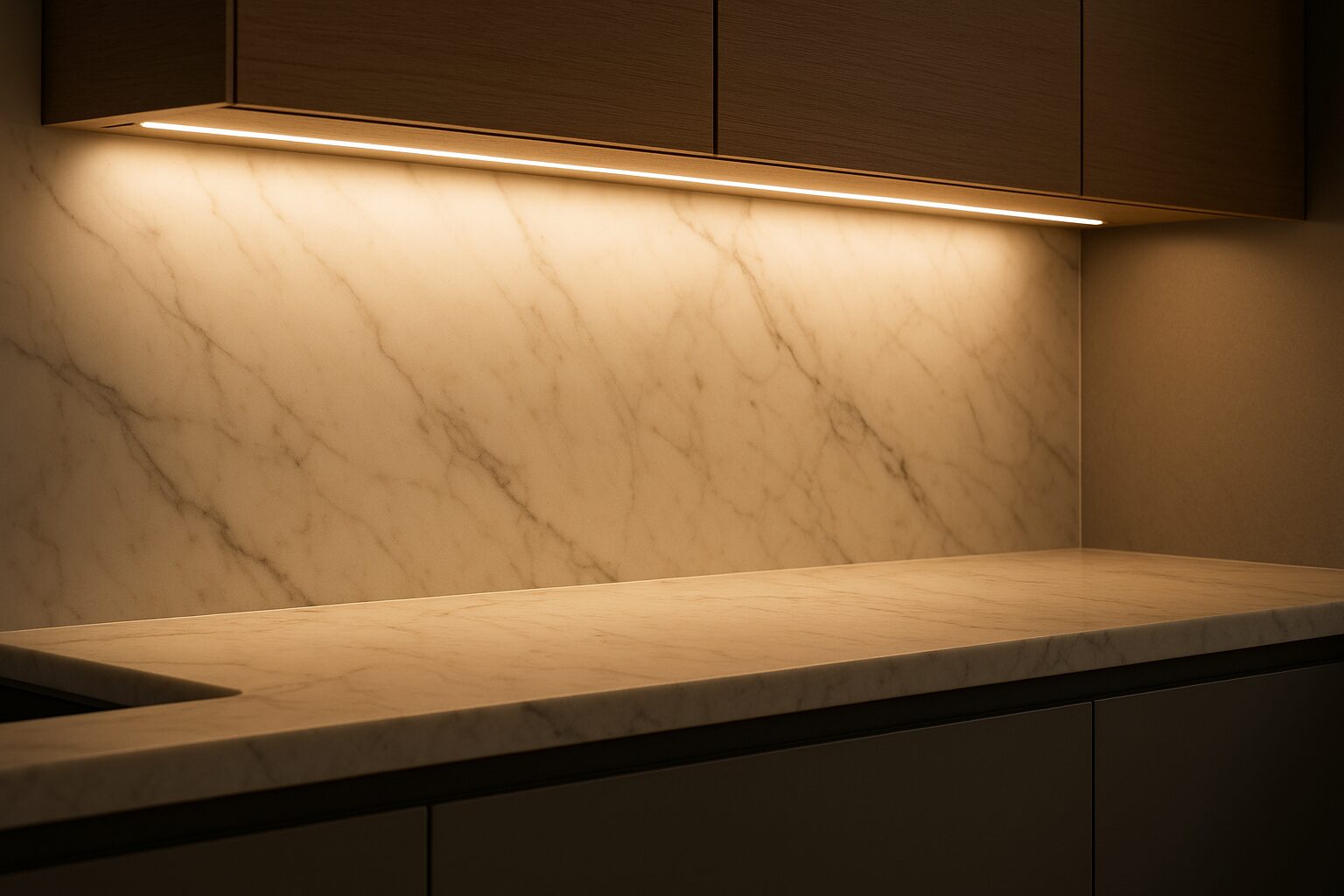 The most effective and popular form of task lighting is under-cabinet lighting. LED strips or puck lights installed directly beneath your upper cabinets illuminate the countertop, providing clear, shadow-free light for all your prep work. Another key area for task lighting is the kitchen island. A series of stylish pendant lights not only provides excellent illumination for the island workspace but also serves as a stunning design feature. Explore our portfolio to see how we integrate lighting into our custom kitchen designs.
3. Accent Lighting: The Finishing Touch
Accent lighting is the final, decorative layer that adds depth, drama, and personality to your kitchen. It’s used to highlight architectural features, display collections, and create visual interest. This is where you can truly showcase the beauty of your custom cabinetry and other design elements.
 Common accent lighting techniques include:
- In-cabinet lighting: Placing small LED lights inside glass-front cabinets turns your dishware and glassware into a beautiful display.
- Toe-kick lighting: Installing LED strips along the base of your cabinets creates a soft, floating effect and can serve as a low-level nightlight.
- Wall washing: Using directional spotlights to graze a textured backsplash or a piece of art adds a touch of gallery-like sophistication.
Key Considerations for Your Lighting Plan
Beyond the three layers, there are a few technical details to keep in mind to ensure your lighting is both beautiful and effective.
- Color Temperature: Measured in Kelvins (K), color temperature determines whether light appears warm or cool. For a welcoming and inviting kitchen atmosphere, aim for a warm white light around 2700K to 3000K. Anything higher can feel clinical and sterile
- Dimmer Switches: Installing dimmers on all three layers of lighting gives you complete control over the mood and functionality of your space. Brighten the lights for cooking and cleaning, and dim them for a relaxed dinner or evening entertaining.
- Plan Early: The most important tip is to plan your lighting scheme early in the renovation process. Integrating wiring and fixtures is much easier and more cost-effective when done in conjunction with your cabinetry and electrical work. Consult with your designer and electrician from the start to ensure a seamless and cohesive result.
Illuminate Your Dream Kitchen
A thoughtful lighting plan is essential to maximizing the beauty and functionality of your custom cabinetry. By layering ambient, task, and accent lighting, you can create a space that is not only a joy to work in but also a warm and inviting hub for your home. At Final Draft Cabinetry, we specialize in creating custom solutions that integrate every element of design, from cabinetry to lighting.
Ready to start planning your dream kitchen in Vancouver or Calgary? Contact us today for a complimentary design consultation. And for more inspiration, be sure to visit our blog.

Recent Posts